
'FOMO' - Fun On My Own and Enclothed Cognition... My Life, Living With a Chronic Condition

Me in 2020
Introduction
This article has been updated several times: 05/06/2024 - changing a lot to the past tense has been upsetting, but life goes on as more goes by….and updated again: 19/01/2026 with edits here and there also prior to that, in 2025 and now 12th Feb 2026- constantly changing, as the full picture is processed further via more science, having also become more up to speed with previously hidden information, uncovering more of the scandal around the disease I live with. That has been a lot to process and another trauma on top (finding out you’ve been subjected to abuse, knowingly by the very systems supposedly designed to help you-that’s a lot to process and it’s been very tough to learn a lot more over the last several years. I knew it was bad, since 2008 but I didn’t realise until recently (around 2023 onwards), just how bad, and purposely so it actually was. That’s been a real blow.
Then there’s new research around post viral sequelae since SARSCOV2 entered the scene. There’s more about all that in my other articles: On The Subject of Wintering P1/2.
It’s been a turbulent few years, the reliving of these harms now through Long Covid via repeated (and new) science, being faced once again with more‘“have you tried” from those new to the scene, and sometimes from friends or family who are unaware of the full picture or extent of the scandal, who don’t have time to read up on it, and often because they prefer to hear of it via some random celebrity endorsement; the way it creeps in dangerously like that, through the PR machine, as if that stranger, in a roundabout way, knows more than you do about your own disease, it makes your skin crawl because you know of the harm around it, especially the harm to young women over decades, and those who lie at the mercy of uneducated healthcare workers in hospitals, with very severe M.E.
It’s not only insulting but harmful and damaging, sad and upsetting. Yes, The Lightning Process came up last year (2025). Something I thought I’d left in the past back in those awful years in 2009, rears its head again like a headless snake that won’t die.
To compound this, the current tide of the well-being boom around alternative methods most of us have already tried decades of, (and continue to utilise as complementary treatments and rituals to keep ourselves going mentally), with an added dose of repeated mind-body reminders, makes life feel a bit like living in a washing cycle of constant déjà vu of further abuse and harm.
It’s one of the reasons, that in 2026 I’m attempting to facilitate a safe place for those of us to connect and avoid further harm, from someone with a direct lived experience and now extensive knowledge around the disease I live with and it’s terrible history of abuse, so others in the same position can be seen and heard in some way because there is no safe medical or community setting for us. Yes they’ll be positive uplifting affirmations and elements of mind-body connection, and very gentle movement if people are able to, but this is about resting more than doing, or toxic positivity. The main aim will be for those with this disease to feel nourished, supported and connected to others in the community, in real life, not just on a screen (if they are able to get there). It’s what I need, as a person with M.E. on the spectrum, stuck somewhere in the middle, still unable to work, and stuck in no mans land, isolated and lonely because there is nowhere else for me to go via social prescribing or community groups because people don’t understand the limitations of this disease, and no mitigations are in place for providing clean air for those of us with immune dysregulation, in an ongoing pandemic. The places I started joining I can no longer use, despite managing to advocate for the use of HEPA filters in one of the places; waiting for that to happen could take another year. I’ve already lost so many.
I know I’m also putting myself at risk doing this and have not decided yet whether I will unmask to facilitate the sessions, to be heard. That will depend on the HEPA filter, ventilation, and what the monitor reveals, but I’ll be keeping it as a small group. The other risk is that there won’t be many in the same position on the spectrum as me, and I might be faced with a group of people with no knowledge of my disease, or those with other challenges (but perhaps receive a treatment plan and healthcare on NHS), but at least I can direct them here or to my Wintering articles if they’re interested to learn more, especially those newly diagnosed with M.E since covid-19, or with long covid, or with post viral illness from another viral pathogen; who are unaware of PEM being the hallmark of M.E for sometime now. The latest conflation around this is like another planned obsfucation. On the up side, I can learn too from others as many of us will have comorbidities and there’ll be conditions I don’t know much about that I can learn about too.
I’ve put the groundwork in to avoid burning myself out educating others constantly, which is what it feels like when accessing any services now. I end up educating people and in return, exhausting myself. At least I can direct them to my website articles. Whether they read them is entirely up to them. There is no excuse for not educating yourself if you can. Understanding means you can learn what and what not to say to support someone and I’m sure I will learn this too about other diseases I’m not so familiar with.
I’m aware this is a challenge I could face and come up against, where others have also been misinformed too, that will be tough, but at least I can signpost them to better knowledge, because healthcare is extremely lacking in this area, and is still regurgitating outdated harmful treatments to those new to the scene. I could also learn similar stories from others about their care and experiences, even those with diseases that do get healthcare and understanding from others yet have also faced similar challenges.
It was one of my ‘whys’ to create the sessions in the first place, to help others avoid the same harm I was subjected to, to provide a space where movement is secondary because I’ve not been able to find one class that I can join in with that facilitates my needs (chair yoga is not good enough). It will be interesting to see how many people with M.E. will be able attend, perhaps proving how inaccessible the world is with this disease. Unless the hierachy of needs is met to the same level as others with life changing diseases, those with M.E. on this end of the spectrum could again miss out on this opportunity as they are mostly still hidden, often housebound even at the so-called ‘mild’ end of the spectrum, and also so used to being left out in society, to even start searching for something like this. We shall see. Time will tell. I’d love to meet you.
Over the last several years, I’ve learnt much more about my own disease, thanks to compassionate scientists, I just wish some of the newbies could see the full picture and look back a bit more at the historical narrative to catch up, like others have. I am not talking so much about the newbies to long viral illness as they have been amazing in many ways, pushing for more, reading the science, but those on the outside, (yet) unaffected with long viral issues, joining in, new practitioners in mind-body medicine, not knowing that applying certain methods can often be harmful without understanding the historical narrative of such diseases which are physiological and have a viral pathogen orgin in many cases, and the way hysteria is still being applied in subtle ways, like conversion disorder and FND; not realising that they’ve got a few decades to catch up on there. A lot of the same science is being repeated for long covid as it was previously done for M.E. A lot of the studies are not entirely new, yet some are being passed off as new learning because M.E. has been previously ignored.
This is being done in part due to this novel pathogen having caused mass issues, inundating an already over prescribed healthcare service, and at the same time, to try and push old narratives to maintain the status quo in post viral care (or lack of) to save money. There’s an interesting link in my other shorter article All of Us Ghosts about this, in a video via ME ResearchUK and the Tangled Story of MECFS i this article too.
This is all being bound up alongside the alternative mind-body narrative too, and is being pushed to the forefront yet again which is the opposite of progress. It’s been explored time and time again. On a biological level there is thankfully some great progress, if only the other noise would just move over for a while to let it through.
Unless you’ve got spare cash, or savings that aren’t reserved for the next imminent upheaval due to welfare changes with no one to support you or fall back on, or you can afford to pay for more remedies or tests, adding to an ever increasing budget of supplements you have to buy each month just to maintain a low baseline of existence, you’re still screwed, as you continue to battle the system for peanuts to keep a roof over. Then there’s things like preparing an LPA because you need to in case the next virus further disables you again. So back to the drawing board, paying for tests would be the only way I could make progress again. In the meantime adding new herbs and eating plans, and scraping a way to connect safely in my community is what’s on the cards, and it’s something that will hopefully keep me going a little. So, the knowledge and ‘progress’ is bitter-sweet. Until the care, full knowledge and understanding is there, nothing changes.
That concludes my 2026 update to this article intro. Read the rest below…
Now seemed like as good a time as any to write about this subject, and I’ve always found writing things down to be helpful too. I hope this article brings some insight and inspiration during the current pandemic as I write with honesty about my life challenges with a chronic condition, and the importance of enclothed cognition in our lives. A phrase which may become more familiar and mainstream as we all self isolate and try to maintain our identity too, through what we wear as well as what we do.
Enclothed Cognition: From Dance Teacher to Expert Fashionista - The original title of this blog, Re-implemented from January 2019…
ThriftVIP was born from having to slow my life right down and, after years of acceptance following on from grieving for my former life as a dance teacher (a job I loved so much), it became apparent that I had to adapt, improvise and hopefully overcome the situation I found myself in. For the 3rd time in my life I was stopped in my tracks by chronic illness (first at 16 with Glandular Fever that I never fully recovered from which took one year to recover enough to gain my first remission, then relapsed again in my twenties, and again a major relapse aged 34 following Swine flu).
In my mid twenties, following my early experiences of a disease called M.E. (MyalgicEncephalomyelitis) I’d left my home town to go and study the course I wanted to do in fashion because there were no courses like it at the time in the East Midlands. I wanted to explore new opportunities and a different lifestyle; meet new people and places, and kick start a career, like any young person would (although I was considered a mature student at 25). Well it definitely led me on a very interesting path as I eventually found myself moving to the south coast (where I was born and where my dad still lived), which is where I qualified as a dance teacher with the IDTA.
A decade ago I had to leave that place. A place I loved, the work I adored with a passion, and move back to my home town, after a short stint in Penzance. Moving away from Brighton, a vibrant place where I finally felt like I could be myself, was something I had to do. It was a gut-wrenching choice.
I initially chose Cornwall and rented there for a while, in an effort to take myself as far away as possible and into nature to see if that would help. The problems persisted.
To assist myself in getting back to health, moving back to my home town again was a necessary sacrifice. It was an extremely painful time, and it tore my heart out. Leaving a place where I’d built up a great life, made new friends, put some roots down and was finally doing I job I loved was absolutely heart breaking, but also necessary for my health. Ten years on I had to make more big changes and decisions again as to where I need to be for myself and ThriftVIP. This is what life is about. It’s a series of negotiations (with yourself and often others). This reminds me of a quote that stuck with me recently, voiced by the character Carolyn Martens in BBC America’s Killing Eve, played by Fiona Shaw, when she said “Life is just a series of trade-offs” (series 3, episode 1).
As I originally started to write this in 2019 on nil sleep for the 8th night that month, and a ridiculous amount of sleeping tablets just to be able to get some kind of rest, I knew that I needed to be living and working in a different environment, and on a better frequency. I made some happy memories in Nottingham since moving back to the area, and met some amazing people, but it still didn’t feel like the right fit, even with being forced out and having to sell up due to the leasehold cladding scandal because it was exacerbating symptoms. I digress. The point I’m making is that every part of us is identified through the where, how and why, and it’s what you do with it that makes progress possible.
Where we live, work and play, how we live with regards to our lifestyle, and why we find ourselves where we are: in life and physically, in different places in the world, matters. Our life experiences, traumas and past history; relationships, family and ancestral history, and what we’ve experienced, all shapes us and leaves its mark. On top of that, being diagnosed with a disease no one helps you with, it becomes all consuming.
Clothes are also a reflection of those changes and how much you feel able to express yourself through the where, how and why. A sense of belonging is extremely important to our identity and the way in which we thrive in society. When part of that is taken away, we find that what we wear can be an increasingly important factor in our lives.
As the pandemic trundles on leaving a wake of mass disablement, there are new challenges in the world of post-viral illness with this novel virus, and the further complications it’s creating for thousands of us is an extra load on top of our already dysreguated immune systems as people with M.E. As viruses continue to do and have done for many years now, creating havoc in the lives of so many of us just wanting to get on and thrive, but STILL there is no appropriate medical intervention coming and a pitiful lack of funding. Not a great choice in creating a healthy society now, or for the future.

Leather Jacket at The Whitechapel Gallery, London
My Journey
Since my late teens and into my early 20's I was just about existing with M.E. (Myalgic Encephalomyelitis) after having to give up a performing arts course due to glandular fever and post viral fatigue syndrome, as a result of the virus. M.E. wasn’t actually diagnosed until around 1995, in my early twenties, and I’ve learnt that its origins in my case were due to the Epstein Barr virus, aka glandular fever. I also learnt in 2025 that EBV can lead to all sorts of other diseases, such as MS.
After a year of ‘recovery’ (years later realising this was a period of remission, not full recovery,) which involved mainly lying on a sunbed with covers over me outside at mums house, in the sunshine, I then studied aromatherapy & body massage for a year to try and understand the human body more, looking for ways I could help myself through alternative methods.
One strange memory of any type of actual treatment for this way back then, was when I saw some kind of specialist consultant in Boston, Lincolnshire who put an electrode on the very top of my head. It wasn’t painful, but I remember it giving an uncomfortable and strange hot sensation. I will never forget it and I have still yet to investigate why this method whatever it was all about, was used. I just remembered about it recently and I’d quite like to know more.
I was set back again shortly after my first experience with M.E. after (and often during) a BTEC Media course which I managed to complete despite fluctuating symptoms and a full on social life, combined with my studies. This was not without often severe consequence, which included severe bouts of shutdown and relapses (a body like lead with deep neuro-immune exhaustion, light and noise sensitivity and swollen glands, sore throat and flu-like illness, from feeling cold and shivery to overactive perspiration).
I remember calling on friends and if they weren’t in or there wasn’t an answer, I’d lie on a patch of grass in the back garden for hours, often on the damp grass because it had taken all my energy to get there.
It all came to a head as I co-managed a local cafe bar, still living in my home town, where I’d grown up and spent my teens and early twenties. I took on a lot of responsibility, overseeing all aspects of the day to day running, promotions and events, and working very hard, often 12 hour days which continued into the night, running on adrenaline. I was so happy to have this opportunity and the creative freedom to thrive in my work. I came up with the name and concept, designing the decor and loved all the aspects of it, putting on a DJ night and selecting the juke box as I put the coffee on in the morning. Being sociable and serving customers is what I’ve always loved and enjoyed, being a host.
I was also living in the flat above which meant you never really switched off. Drinking stupid amounts of coffee and working too hard took its toll, amongst other recreational enhancements (recreational drugs at the time were also a regular choice, as a young person who embraced the 90’s rave scene). It became very stressful due to emotional issues with the owner who was making predatory advances on me at the time. I’ll never forget one thing he said to me amongst other statements he made, like claiming that he was “magic’. He said “You’ve got a few years left, but once you hit 30 that’s it” (he was referring to my looks). What a nasty thing to say to a young woman in her 20’s with her whole life ahead of her, and this, coming from a man almost old enough to be her father.
When I look back now I can see that I looked up to him as I would if I’d had a father figure. Something I later processed feelings around in therapy. I enjoyed the attention he was giving to me. He looked after me when I was feeling poorly and brought me a tray with food to the office, fed me spliffs and coffee which I enjoyed, even though they were doing me no good at the time. I didn’t see beyond that and let him treat me badly as a result. I remember him shouting “bitch” over and over again and smashing plates in the cafe one morning, as I came downstairs to work. Just one of his moods at the time. I later realised he was angry because I’d refused his advances. I already had a boyfriend. I was still naive and stupid and probably encouraged it too because I enjoyed the attention I was getting.

Happy memories: Mama and Papa came for my 21st birthday. Legends cafe-bar, Newark-on-Trent
Living there with my boyfriend at the time put me in a very difficult position. I was only in my early twenties, so didn’t second guess the energy I had to start with, to continue at this pace. It caught up with me and I ended up bed-bound in the flat upstairs listening to all the happenings going on downstairs, feeling extremely lonely and isolated. This was not just burn-out, it was existing on my back like a dead weight. The other symptoms didn’t go away with rest either and no one was able to explain what was going on. I constantly felt like I had flu, which I now realise as the over-active immune response/dysregulation.
It was tough to remain in that place as it was also my home. Listening to all the hustle and bustle below, knowing I could no longer be a part of it and work anymore made it all feel so much worse, including the ME diagnosis which no one really understood, including myself. What made it doubly worse is that my best friend and her partner had taken over my role, so it felt like a betrayal at the same time, mainly due to the actions of the owner that they couldn't see through, (like I was making it all up). An awful, awful feeling of being made to feel in the wrong for someone else’s actions against you. It broke me and our friendship suffered as a result of that. As I look back I realise I was also doing the work of 2 people for no pay!
During this time I tried Spirulina, kinesiology, lactose and gluten-free diets, and a herbalist.. I lost a fair amount of weight too, although that could have been the affects of taking E’s and speed most weekends.
Update: My friend and I have since reconnected and are working slowly towards rekindling that friendship, in small, slow steps. Our journeys since that time have been long, due to years sandwiched in between, both of us leading very different lives (most people with M.E. are not afforded the luxury of having their own family so their lives are often very different from how most of their friends experience life, careers etc); and experiences, many. Now, we come together again where we meet each other in life, and do our best every now and again when the disease limitations allow snippets of social, a few times a year.
Putting some roots down
Later on in my life, following the longest period of remission I’ve ever experienced with this disease, (possibly also due to being financially supported by a ‘partner’ at the time from my 2/3 year at uni, when I started to experience some worsening symptoms due to work load), I was stopped from doing the job I loved in 2008: dance teaching.
Perhaps the pressure of not having to worry about the roof over etc for a time had helped to see me through for a while, even during my lifeguarding years, therefore dealing with symptoms was perhaps reduced. I was however also treated badly by this person too, but it kept me from having to worry about the basics of survival for a time and to experience a different kind of life, one I had never experienced before. What a novelty that was for me, not having constant money worries. Having just finished a course at uni where there were a lot of affluent students who were financially supported (often a requirement to enter many parts of the fashion industry - who you know and what you can afford to do to get on in many cases, it’s a very elitist niche, or was more so then than now).
I realised that to be able to take a job I’d been interviewed for at Ted Baker, as a shop assistant, I wouldn’t be able to afford my rent. I cried, realising my dreams of getting into this industry even at the lowest level were shattered in some ways. It was all I could find as paid work, despite being told we weren’t to accept less than £21,000 per year at the time (alright if the jobs are there). So I suppose I took the attractive option of becoming a kept woman for a while. I was exhausted and wrung out with realisation of an industry not really meant for people like me, or that’s how it felt. I’d had to work all summer just to save the deposit for my second year accomodation, and had worked part-time all the way through my studies up to then, so was ready to take some time out and this person offered it to me on a plate (after grooming me first of course). He’d bought me a computer too which had been amazing and meant I wasn’t restricted to uni library times and could do work in my room. That room I’d worked hard to get on my own steam by working all summer. And help from my wonderful mum too, where she was able to which had kept me going.
These reasons are why I eventually set up ThriftVIP instead of searching for roles I might fit into later on, years after graduating (health issues obviously created a massive career gap too). Now there’s social media and organisations like BRICKS magazine and the Learner Platform, so it’s easier to find opportunities, without having to go out, spend money, be at certain places to get seen or meet the right people.
There’s an article about this trauma too which I wrote as a cathartic process, following some intensive therapy and why I created my GRLPWR t-shirts as it was a trauma from this person I later dealt with.
So, following this long period of remission, and new-found confidence to explore and qualify as a dance teacher in my 30’s, I had to give it up after just 7 months of teaching, and after nearly two years of training and work experience. I couldn’t believe it, as prior to this I’d managed a life-guarding role, regular training and fitness tests, over the last two years. The M.E. was always there in some ways, albeit mild, but when another infection hit, I relapsed badly again.
I had come out of that abusive relationship and finally had the confidence to do what I loved as a job which really helped me to deal with the end of that relationship at the time. It was something I’d finally found the confidence to explore and qualify for in my 30's, and funnily enough, some of that confidence and self-belief came from that previous abusive partner who believed in me in ways I hadn’t believed in myself before (father figure again). There was good and bad in the relationship as there always is- he had helped me train for my lifeguard swim test prior to this during our time ‘together.’ Perhaps my enthusiasm to return to dancing was a trauma response to help me deal with it at the time because I wasn’t able to even talk about this trauma until years later.
This new dance teaching role was alongside getting my first (small) mortgage, not knowing if I could afford to keep up the payments, but secure in the fact that I had a large deposit so could just sell if i had to, if the worst happened..
I’d worked out a projected forecast with all the schools I was to be working with and had to make sure I also added in some youth clubs and other work to support this, to supplement my income, to be able to get my self-cert mortgage.
I caught Swine flu just before I became bed-bound again, after believing the symptoms I was experiencing were just burn out from over working, and possibly psychological, so followed the behavioural medicine model at the time, which was the only model available, alongside ant-depressants which i didn’t need. I was happy in my work and life. I didn’t consider it would be that awful thing I had before called M.E. I’d been doing quite well for a long time.
Before that I had previously moved several times too. I was working 4 different part-time jobs, two where I was self employed, and it was all very physical work. I carried massage tables, and other equipment including paperwork to various different places. Even with a car it was still heavy work ( I used to carry my massage couch some of the way too as parking was difficult). But I was probably at the most fittest I’d ever been too. This is why I put it down to burnout. But the pain that ensued was on a new level I’d not experienced before.
I was utilising my massage and aromatherapy qualification by becoming a practitioner part-time alongside dance teaching, including working for Polestars & Seven Veils Productions (and running my own classes). I was also working at a health spa in Brighton’s Kemp Town, following hair salon work, both which involved running up and down stairs all day. This was between moving and renting then finally buying again. It was often quite stressful switching hats all the time and it’s unfortunate that another virus knocked me down again. I also remember having caught a particularly nasty virus shortly after teaching my first school jobs, where I had to have an inhaler due to respiratory issues. This was while staying short-term at a life-guard friends place while they worked away, in between places to live.
I also had a significant amount of stress due to a noisy and unruly neighbour all during my dance exams while renting, and some of the time while working at the salon. The police eventually had to be called as I feared for my own safety and I had to move into a temporary grotty hotel. I often found myself working two part-time jobs with a full day followed by an evening shift, which is what I did during work experience, prior to securing paid teaching work in schools and colleges. Later, when I became bed bound again these were some of the reasons I believed that my symptoms could actually be trauma related, alongside burnout, and agreed to do what I could to ‘get better.’
After another move in between temporary accommodation, at the friends place, I’d decided to put some roots down and get a mortgage. I felt I could finally get on with dance teaching properly and get on with my new found career and a fresh start, but it was short-lived. I then got Swine flu.
A year later, mum took me to the Gambia in an effort to help me with my ‘breakdown’ as I was so depressed and fed up of feeling so poorly. I’m not sure if those tropical vaccinations helped me either as sometimes they can affect our immune responses which is why I have to avoid them where I can now since a bad reaction following a flu vaccination during that time too. I’ve only had tetanus ones since then, if necessary.
I also later found out that the unruly neighbour at that rental place had made a spy hole in the wall. I really hope they change the regulations on those beautiful regency conversions by legislating that all partition walls should be fit for purpose in relation to noise and be robust enough to stop this happening to anyone else. The way that bedsit was designed made it worse to deal with. The managing agents dealt with the whole thing appallingly which is why I had to get the police in eventually. It’s also why I wanted to get my own property again, although unfortunately I had noise problems all over again which only made everything worse and triggered the flight or fight response.
I went from teaching dance 3-4 times a week to literally having to crawl from my bedroom to the bathroom.
“One day, I woke up and couldn’t move. I felt paralysed as if my whole body was full of lead. It was really frightening.”
When the load fully hit in 2008 (I kept on working from April - September that year, pushing through) I had to swiftly change over to an interest only mortgage having only had it for a short time, feeling lucky that I at least had a roof over to call my own. The sale of this roof over my head would later help to fund a myriad of treatments as sadly there are no specialist treatments available. It’s still a case of muddling through and doing your own research, finding treatments that resonate with you personally, because there’s no ‘one-size-fits-all'.’
I did an NLP training programme which made me feel like a superhero for a while, but then I was back with feeling really poorly with swollen glands again and generally being unwell and so, back to square one. Some may know this as The Lightning Process. I used these techniques passed on to me from someone else struggling at the time I’d befriended. I was getting more and more desperate.

A trip back to the south coast, rediscovering the joy of my life there and gaining closure on a trauma
Fibromyalgia Diagnosis
Symptoms can vary from person to person and can often be unique according to the individual with Fibromyalgia, much like M.E. although the signifying symptoms are what most will experience.
I was finally diagnosed in 2011. It took me 3 years to get this diagnosis. I literally had to beg my GP to send me to Guy’s & St. Thomas’ Hospital in London after I’d researched them myself and offered my GP the information, including the hospital’s address and contact number. This is because some of the symptoms I was experiencing were different to my previous experience of M.E. - the intense pain for one.
The CBT and GET approach were not working for M.E. in fact, having the opposite effect , causing further decline and then serious relapse, and there was nothing else. I was just left to figure it all out alone. Many symptoms of fibromyalgia are the same as M.E. (flu-like, swollen lymph nodes, body aching, stiffness, cognitive issues, temperature dysregulation, sound and light sensitivities etc). But because the pain was so bad, excruciating in fact, I thought it must be something else. Fibromyalgia seemed to fit, so i identified it myself as potentially being assessed for fibromyalgia. Now I’m starting to think it’s yet another opportunity for conflation and lazy medicine, due to so many overlapping symptoms, and for me the fact that it followed another virus. For me, major relapses have always been viral triggers, so it could all be MyalgicEncephalomyelitis, because PEM is the main element that holds me back now.
Being pro-active when you’re struggling already is not easy and I realised GP’s were not always there to help other than writing prescriptions and possibly offering referrals as long as you did the leg work. I developed anxiety just going to the doctors, which still affects me to this day, due to the ongoing attitude, gaslighting and dismissive behaviour of most of them; especially I believe now due to some unhelpful GP writing ‘somatoform disorder’ in my notes at some point during my medical history, which felt so insulting when I found this out, especially when no treatment was even being offered if that’s what they believed, despite their CBT not working for M.E. (not to mention all the intense psychiatric therapy I agreed to do, to see if this was the cause, believing this approach thinking it could be this). There was and still is no proof of this being the case, yet they can slap this label on anything they don’t understand which is so dangerous for our healthcare. They have instead in fact, created a layer of trauma onto us with their unfounded theorising, impeeding our care and access to support.
( I later found this out after having to access my medical notes for the DWP). This is the one trauma I cannot reprocess due to M.E. being an ongoing problem in healthcare, and all systems of trying to find support, where these places can actually be harmful due to lack of protocol and dismissive attitudes, which are often abusive.
I now understand that the reason I’ve not had proper care for this disease is because the behavioural model has been used since the medical term for M.E. was downgraded to cfs, to purposely minimise it as a money saving exercise. Finding out about the whole rotten scandal years later was a massive shock and has been another layer of trauma to deal with ever since.
There was an enormous amount of pressure to fill out forms to get any help and I remember sitting in bed trying to get a crisis loan via the job centre with social services, crying because I wasn’t able to walk to sign paperwork in order to access the loan. I asked them for the Samaritans number and they couldn’t even give that to me. It was the most awful moment of my life. Even holding the phone up to my ear was absolutely exhausting. It took me 3 months to fill out a DLA form and then it was flatly refused. I never imagined I’d become disabled. To get other benefits, you have to attend medicals and assessments, and there are so many forms. And all the while lifting a pen was exhausting and they took hours and hours to do. I eventually got help a few years later, but there was no one to offer information to me about these kind of services at the time. I didn’t even know they existed. It felt like I was the first person in this situation with this type of condition, where nobody would help me, or believe the condition was even real. They made me feel like it was my fault and that I was a massive inconvenience just existing. It was horrendous.
Fibromyalgia shares a lot of similar symptoms with M.E. also known as Myalgic Encephalopathy or Chronic Fatigue Syndrome. As I’ve learnt over the last 5-6 years, many diseases like ours with complex chronic elements are conflated, many of the labels now due to laziness around medical science, especially for women. I’ve read about FND also being one of those, being used more often since the coronavirus, SARSCOV2, where people have been diagnosed with this following Long Covid. There’s also an historical narrative in this paper.
An extract from the American Journal of Psychiatry June 2010 (where Jon Stone, Michael Sharpe and others lobbied the DSM-5 to change the name of Conversion Disorder to FND in their editorial ‘Issues for DSM-5: Conversion Disorder reads:
“the name “conversion disorder” has not yet been widely accepted by either nonpsychiatrists or patients. We therefore need a name that sidesteps an unhelpful brain/mind dichotomy, will be more widely used clinically, and will be more accepted by pateints. We suggest that the term “functional neurologcial disorder,” as a diagnosis for symptoms such as “functional weakness,” would be practically and theoretically more useful…..
In summary, we suggest that conversion disorder be renamed “functional neurological disorder”
(DSM-5 300.11 (2013)
The DSM5 Primer states:
‘Conversion Disorder (also known as Functional Neurological Symptom Disorder or Functional Neurological Disorder [FND}) is a mental disorder characterised by neurologic symptoms (either motor or sensory) that is incompatible with any known neurologic disease’
And herein lies the danger of labelling anything they don’t or won’t fund to understand, as ‘mental illness’ …and the age-old hysteria narrative sadly lives on. This is not progress.
Sometimes I think it might have even been the mercury amalgam fillings in my mouth leaking toxic vapours into my system, causing illness. I spent a long time down a worm hole during the start of the pandemic, researching IAOMT dentists to carry out the extractions, prior to getting this done later on. Preparing the detox treatments to complement this by following some of the Andy Cutler protocol in terms of the core 4 supplements to take to support myself ahead of, during and after the extractions. I wanted to explore any possible avenue I could to get myself better.
This is what happens, because you don’t really know or understand it, you’re always searching for reasons and possible solutions. And all you’ve got is other people with lived experience (which was offering better help than any healthcare provider) to talk to about it, and the internet and books for research because you’ve been left on your own to deal with it; done the therapy, brain training, pacing etc. I can’t tell you how much money I’ve spent on my health over the years but it’s definitely in the thousands. I even used to get really paranoid about using anything chemical based such as cleaning products and actually had a panic attack over it once because there were only ever questions and what-ifs.
This major relapse followed a swine flu virus. Now it has covid reinfections on top causing more problems again. I’ve had 3 major relapse life events in total with this disease including the original EBV, from the age of 16/17- to where I am now, decades on.
As well as the usual main symptoms, it’s like untangling a big ball of wool. I’ve also had to face many of my demons over the years, as according to many theorists this was all apparently due to the result of being ‘stuck’ in illness. I now follow the biological science not the pseudo science. This disease has been deemed as being psychological for long enough now, with no real evidence of that, plus I’ve done much work on my personal traumas which I happily found out no longer require EMDR after trying to continue with it and nothing being there anymore as distressing (apart from the one I’ve already spoken about caused by healhtcare); and now I’m left with post-viral ongoing chronic illness that does have scientific evidence, so I’m going with that.
Unfortunately and ironically, I cannot process trauma that is ongoing from the medical profession and the ongoing stigma still surrounding this disease; that is the daily trauma I have to deal with and that is one I cannot reprocess until medicine invests and changes its dangerous current and outdated narrative.
An apology would be a good start.
Accountability
Truth.
Respect.

Image: Camila Quintero Franco
I learnt to accept and to live with Fibromyalgia and M.E. the terms given to a myriad of symptoms relating to these immune/neurological diseases, affecting the whole body (multi-system complex chronic diseases). I was also diagnosed by a rheumatologist at the time for fibromyalgia which was the only way you could get diagnosed. They really need neurologist/immunologist/endocrinologist referrals; in fact a multi-system holistic approach, but not until the behavioural approach is abandoned in favour of physiological and biological approaches now. I think the scientists have now proven otherwise and things need to start progressing and changing for us all to evolve in this area of healthcare. Its ties to fiscal aspects is the obvious barrier here that may not shift much in terms of systemic change.
For me, symptoms include painful joints and muscles, all over widespread pain, allodynia (touch, light and sound sensitivity), dsypnea (shortness of breath/breathlessness), insomnia, RLS, palpitations, headaches/migraines, , temperature fluctuations, hormonal imbalances, flu-like symtpoms, sensory overload, , short-term memory loss, cognitive dysfunction, and severe body shutdown/neuro-immune exhaustion (PEM / Post Exertional Neuro Immune Exhaustion), to name but a few of the many symptoms. The goal posts constantly move, so consistency and routine is a luxury I don’t have very often. Being able to exercise when I want is a distant memory, sadly and if I do push beyond that 2 minute anaerobic threshold, I’m toast and will pay brutally. There has been little investment in women’s health over many years, so the ongoing inflammation in the body can cause all sorts of new problems over time too.
When symptoms crept back in 2008 over 6 months from April that year, I remember coming back from teaching a class and collapsing in pain and utter exhaustion, but unable to relax my legs on the bed. The pain was so intense, I was terrified. It felt as though my legs were suspended in animation. It was such a strange sensation. A really difficult sensation to describe to anyone. Then I’d get RLS all night (Restless Leg Syndrome) which is still an ongoing symptom. I would sit and sob on the floor for hours, and hit my legs in anger and frustration at my body. It felt like it was turning against me. I didn’t expect everyone else that was supposed to help to turn against me too.
My GP informed me that if I continued, I could traumatise my muscles, but he never explained what he meant by that, and at the time I was too exhausted and stressed to ask. So, as usual I Googled it at a later date and it basically means injury to the muscle fibres and connective tissue which would have been a better explanation at the time compared to the dramatic sounding term which only added to my anxiety.
I am also now just learning about hEDS and that it’s a spectrum disorder, like M.E.
As a person with M.E. and fibromyalgia I could also be on the spectrum for this; thanks to a campaign from Nicola Jeffries and The Chronic Collaboration. Other co-morbidities that I’m learning about and think I have are MCAS (Mast cell and histamine issues), POTS / Dysautonomia and possibly myocarditis due to breathlessness worsening post covid infections, amongst other worrying symptoms like pins and needles and new muscle weakness following infections. This too might explain why my head pounds on any exertion when going upstairs and I am breathless so quickly most of the time. The burning of my muscles on the smallest exertion has been on a new level since covid infections, but the muscle lactate problem is the main reason why I was affected so severely as a dance teacher. Seeing new research in these areas, also around lack of oxygen, red blood cells, lactic acid build up from even minimal exertions, it makes sense. The best way i’ve heard it described, to be able to explain it to others is that it’s like you’re running on dirty fuel, and that as well as this, there’s a lack of oxygen getting to the tissues.
Now since covid, I am more concerned with the breathlessness and weakness being related to cardiology and lung capacity/damage, with my dads side of the family being susceptible to this. Again, all guess work as to what damage this new pathogen has caused, however scientific papers are revealing a lot more, and there are now thousands of new peer reviewed papers since Covid-19 arrived. Then there’s the whole neuro diversity connections too, so i’m awaiting asessment for ADHD / AuDHD.
It wasn't until I was in Egypt years later, excited about a possible scuba dive, when I had to see a doctor prior to doing the activity because my symptoms were so similar to the bends, which is a condition that divers get due to nitrogen dissolved in the blood and tissues by high pressure from bubbles as pressure decreases (decompression sickness). He asked if I’d ever had a muscle biopsy and seemed surprised to learn that I hadn’t. I’d never even heard its suggestion before.
According to my symptoms it seemed a pretty good thing to do, but as usual I was relying on an already over subscribed NHS and didn’t have an endless money stream to try out every treatment or test by going private, including those I’d wanted to do to test my cortisol levels, due to having palpitations for most of the time, often feeling hyperactive in between the fatigue, a metal taste in my mouth and gasping for air during the night. I thought this was mostly anxiety, due to what I’d been told, but it doesn’t make sense a lot of the time, especially when I’m happy and relaxed and get it. We know more about that now thanks to science where the autonomic nervous system is involved but the science is still severaly lacking around the causation from this, especially related to hormonal imbalances that could be taking place too.
I still get these symptoms, including a clenched jaw all night if I’ve overdone it and haven’t slept for many nights; or if I’ve done an activity that’s exciting like going out with friends or dancing socially, now less and less due to the punishing consequences of even doing this once a year, I stopped being able to do this last year and yet to try again. Or, sometimes it’s simply after having a phone conversation with someone, which can also cause excessive perspiration and flushing. It’s so odd. I also get muscle twitching in really random places, like in my ribs or upper lip. I’ve realised this is a type of hypoxia where the muscles arent receiving enough oxygen. The widespread pain is a combination of sudden shooting, radiating, throbbing, deep dull aching type pain and constant pain at times. Whatever form it takes, it always lets you know its still there. Many years of acceptance and getting used to the pain has helped, alongside 500mg of magnesium glycinate every day (as well as all the other supplements).
I never got to scuba dive, but I think I prefer snorkelling anyway.
I’ve tried one session in the hyperbaric oxygen chamber. I did this for the first time in 2025 due to worsening brain inflammation following SARSCOV2 infections and it was ok. I felt relief of sorts for a short time, perhaps clearer but it’s hard to tell after just one treatment. I’d need to spend £250 to find out if it could be beneficial as you need a course for the full benefit. It’s on my list of things to save for again, along with the many other possible treatment options and repeat treatments for those which relieve symptoms, such as flotation and gentle massage. It all costs money! I also discovered that massage can also make me feel very poorly too, so have to feel well enough in the first place to have one, and then I never know how it’s going to be post treatment so have to make sure I have recovery days planned in from the treatment which may or may not relieve symptoms. I’ve laid awake all night, feeling wired or in pain following reflexology and massage treatments so it’s entirely hit and miss. Until we know exactly what we’re working with and how to treat it, it can be like playing Russian roulette, so I try to find knowledgable therapists with experience of working with people with M.E. who understand these factors.

Prolonged stress can cause problems over time for anyone. People with M.E. get those detrimental effects almost instantly, even when there is no immediate stressful event.
Cerebral blood flow (Orthostatic intolerance), HPA axis (ongoing hypo function due to ongoing sickness response due to ongoing infection), different patterns of ANS dysregulation, increased activation of the immune system and elevation of pro-inflammatory cytokines, anaerobic threshold and so on, are just some of the physiological patterns with this disease, causing these stress response symptoms.
The nervous system is on high alert despite us feeling happy and relaxed. Its very taxing on the body, but also means that adrenalin kicks in too easily and we end up in pain, shaking and weak as if we've just escaped a life or death situation. Exhuasting.
When your stress response is still dysregulated, even after years of mental health therapy and reprocessing traumas, utilising CBT, NLP, Autogenic Training, mindfulness, constant pacing, so many periods of rest and digest care, and more besides, this is something way beyond the control or behaviour of anyone. The first stop should have been immunology and virology, then endocrinology to assess hormones, then considering the terrible RLS I was suffering, neurology. By making us focus more on what we cannot control and making us feel bad for not getting better, they (medicine) have created a worse problem here. Why didn’t they consider the virus I’d just had? Do brain scans. Perhaps because it was more convenient for them to label it with something like mental health. Cheaper, perhaps and better for them to prescribe their anti-depressants. Unfortunate for me, but very convenient for them was the fact that I did have some traumas to deal with, so it ended up being used against me as the only reason for illness.
Patient blaming is what healthcare chose. And years of added damage and worsening mental health due to wrong approaches. Healthcare has actually caused mental health problems, and still adds to this ongoing stress because of the outdated processes and systems, lack of scientific updates, communicating with the healthcare system and a distinct lack of training modules informing this early on. so how we are expected to progress I do not know, especially when accessing any healthcare settings, where the healthcare workers are completely uninformed. It’s something they caused themselves by wrongly labelling us all with mental health problems as the main cause of the disease.
‘In 2013, after five years unwell and a return to severe illness, I came to believe that I would not recover. This belief did not harm my mental wellbeing, contra to the claims of Dr Miller and colleagues.[1] What did harm my mental wellbeing - to such a significant extent that I have since needed professional support to move forwards - were the beliefs that others held about me and my illness: that I could get better, if only I reframed my own thoughts, or did more exercise, or exercised in a different way, or stopped focusing on my symptoms. In short, the belief that there was a ‘path’ to recovery (as Dr Miller and colleagues put it),[1] if only I chose to search for it.’
Katharine A Cheston
Update: I’m now awaiting an Autism and ADHD assessment, as I’ve experienced worsening neurological impacts since the latest viral pathogen of 2019/2020. Over the last several years, I’ve learned more about other comorbidities especially around women’s health too, and this is an avenue I hadn’t explored or even considered up to now, but seeing and hearing others talk about it has prompted me to look into this as I resonate with a lot of aspects of neurodivegence and its traits.
For now, reducing stress, screentime, breathing exercises and resting can sometimes be beneficial, although a lot of the time, no amount of attempts at deep breathing or rest helps the overactive and high alert nervous system when at it’s most potent with negative symptoms. As an example of this, I’ve spent 8 hours in bed, attempting deep breathing all night, only for my breath to still be short and shallow and still be gasping for air (also air grabbing, another symptom). This is why I know it is not something I can control or have control over. This, it feels is so much more serious, yet no proper investigations as yet.
Calming our breathing can sometimes help restore calm to our overactive nervous systems, sometimes it is fruitless no matter how many attempts we make, as the body has its own ideas and it is something beyond our own behaviours and control. Being your own medical practitioner is really not easy at all.
Getting out in nature and connecting with other humans is what we all need and it’s the most difficult thing to do when your access needs are not met, but I’m working on this by creating my own sessions to facilitate for others in the same boat. Any chance I get, I’m outside listening to the birds, believe me! Outdoors and being active is my happy place, it always has been. Progesterone and a combination of HRT medication has been the best thing to help with sleep ever since peri-menopause in my mid-late 30s (unabel to access until 40’s). If only this had been prescribed instead of anti-depressents.
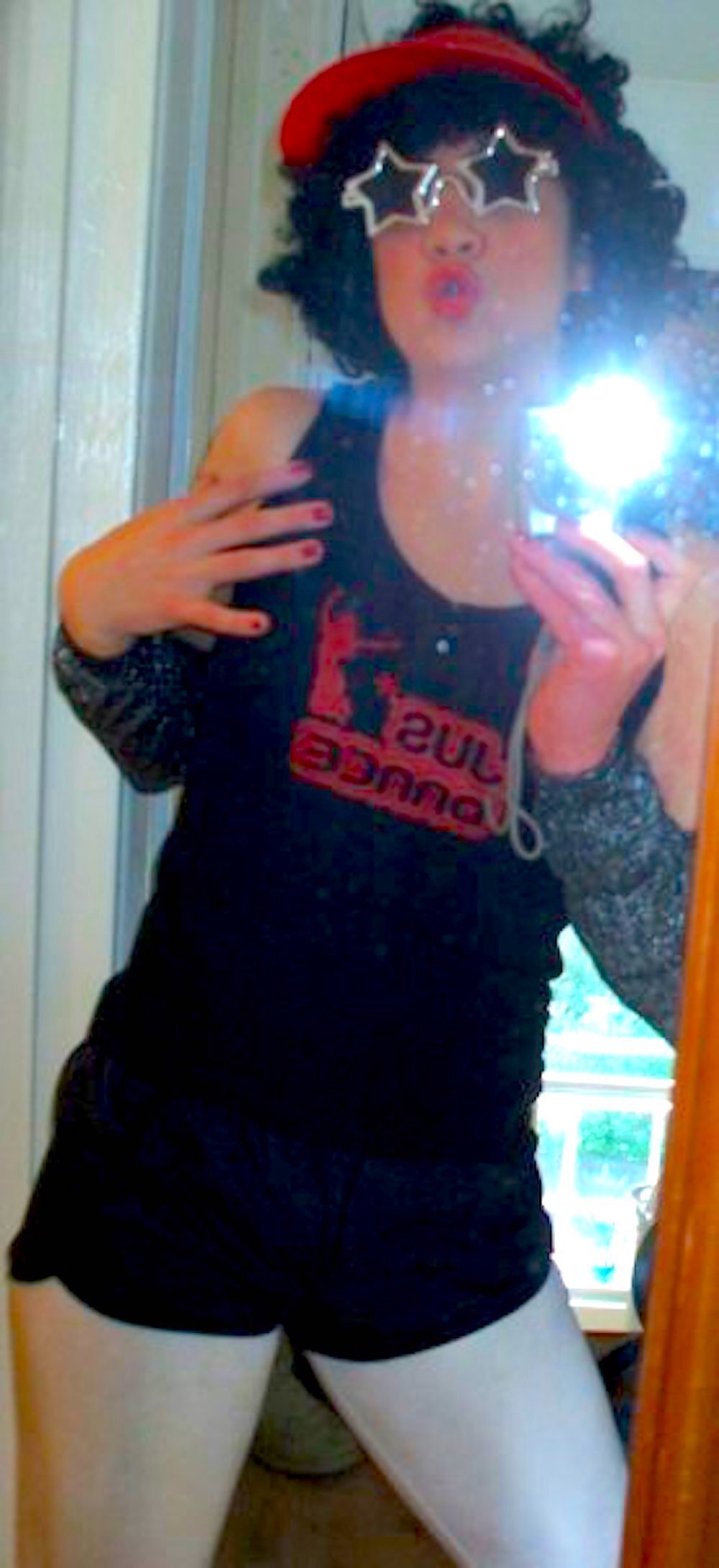
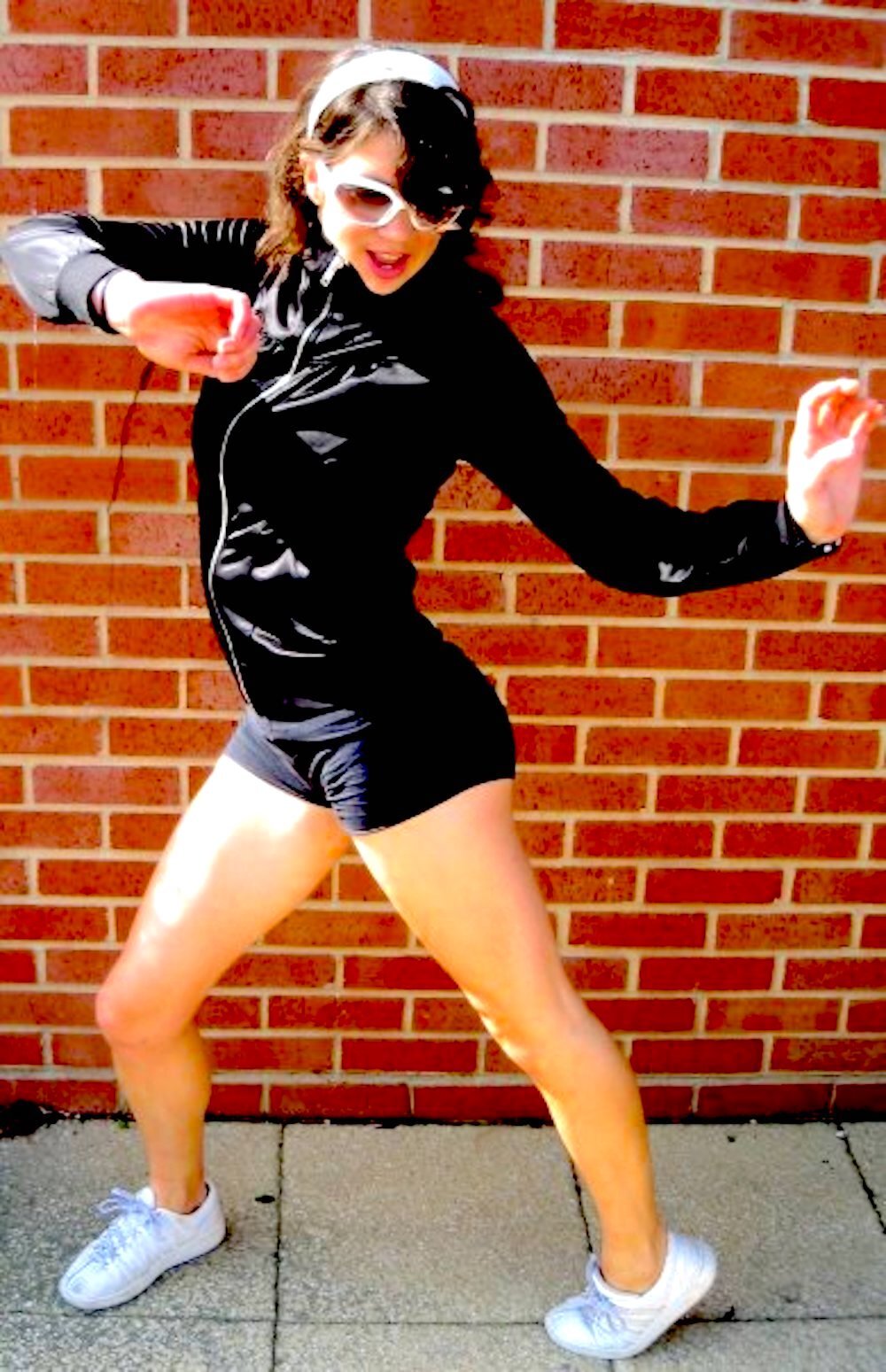
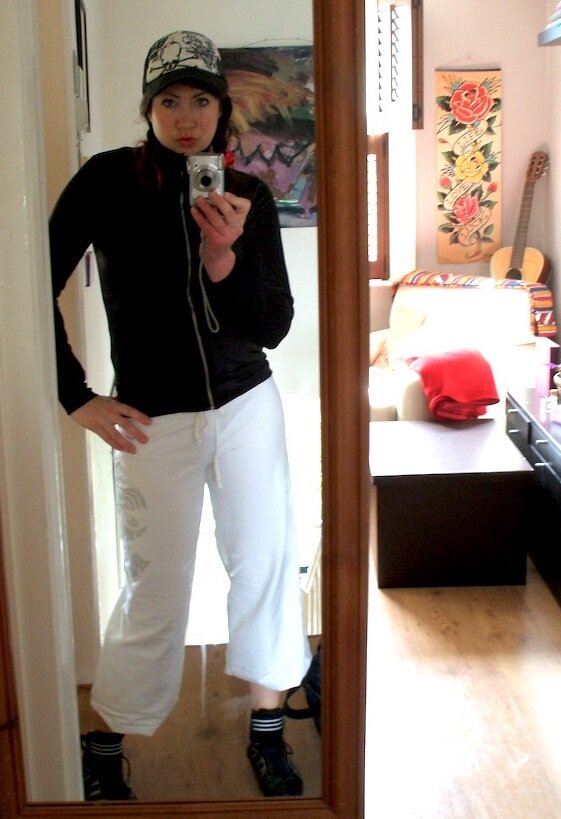
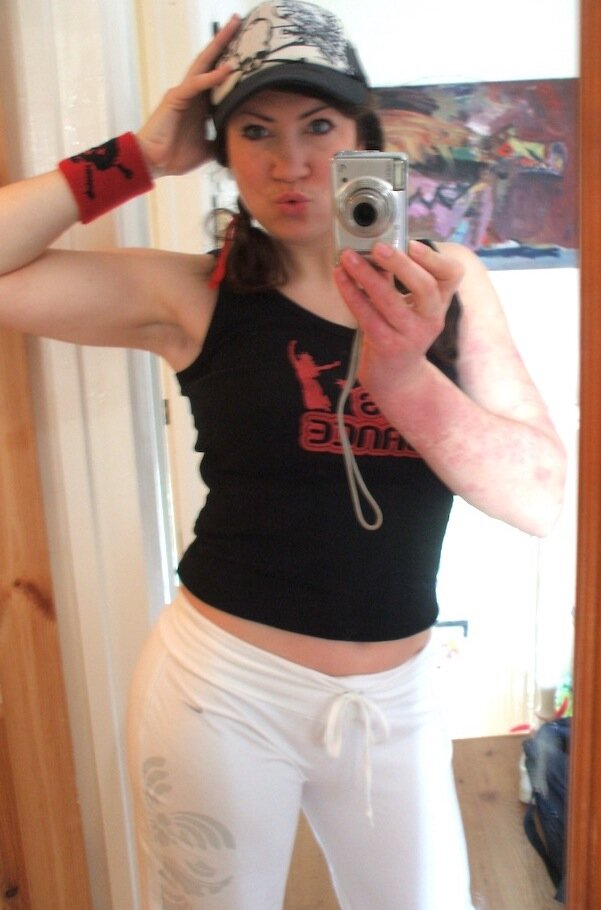
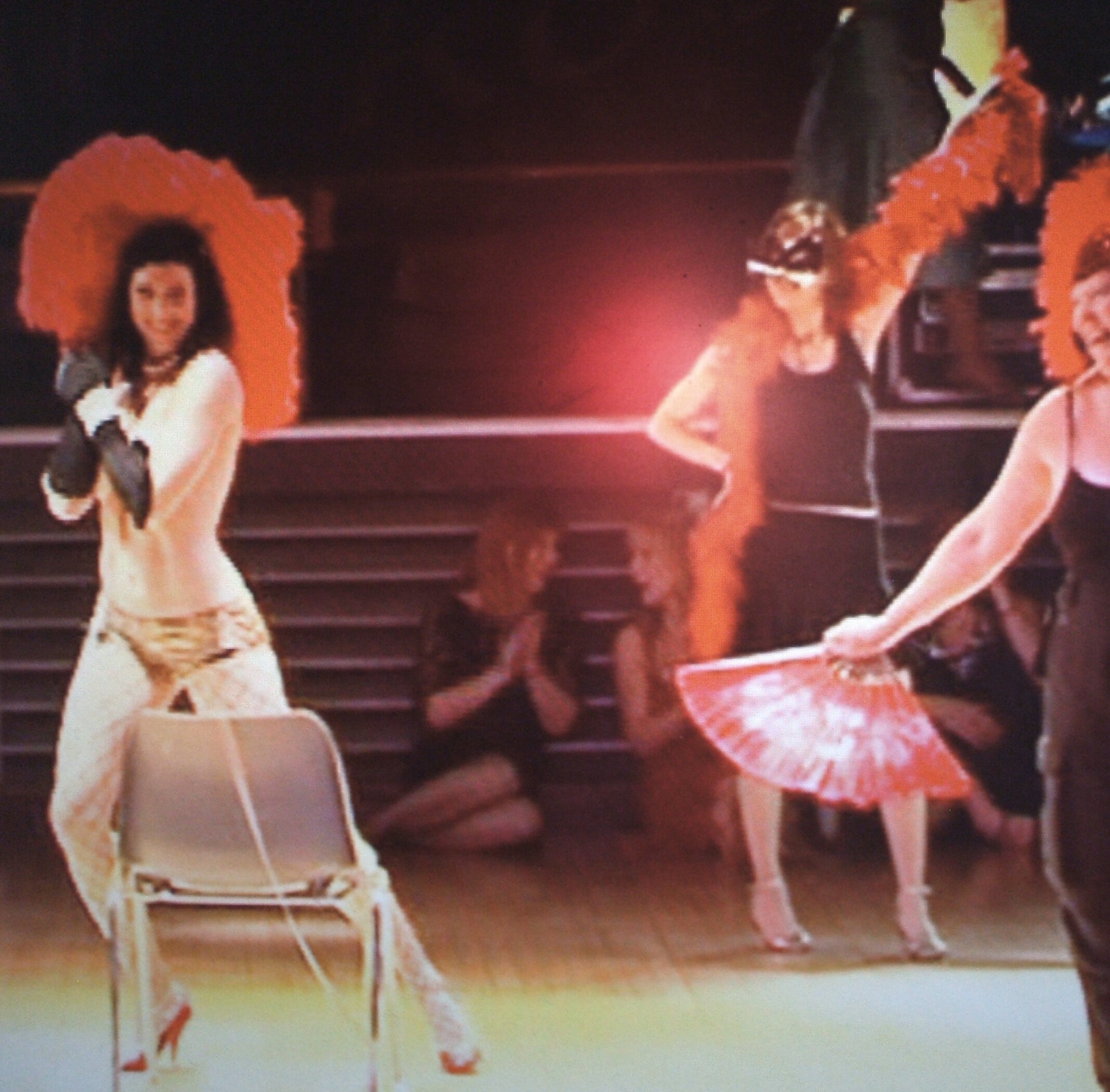
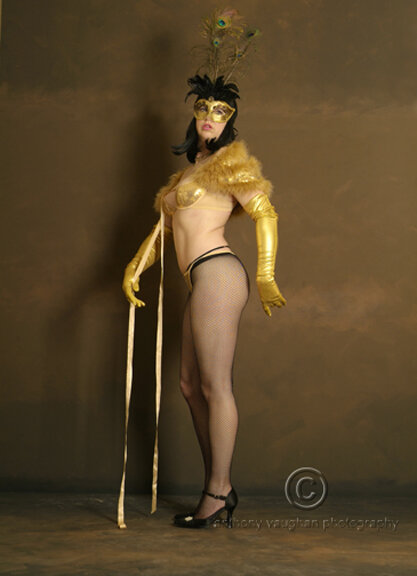
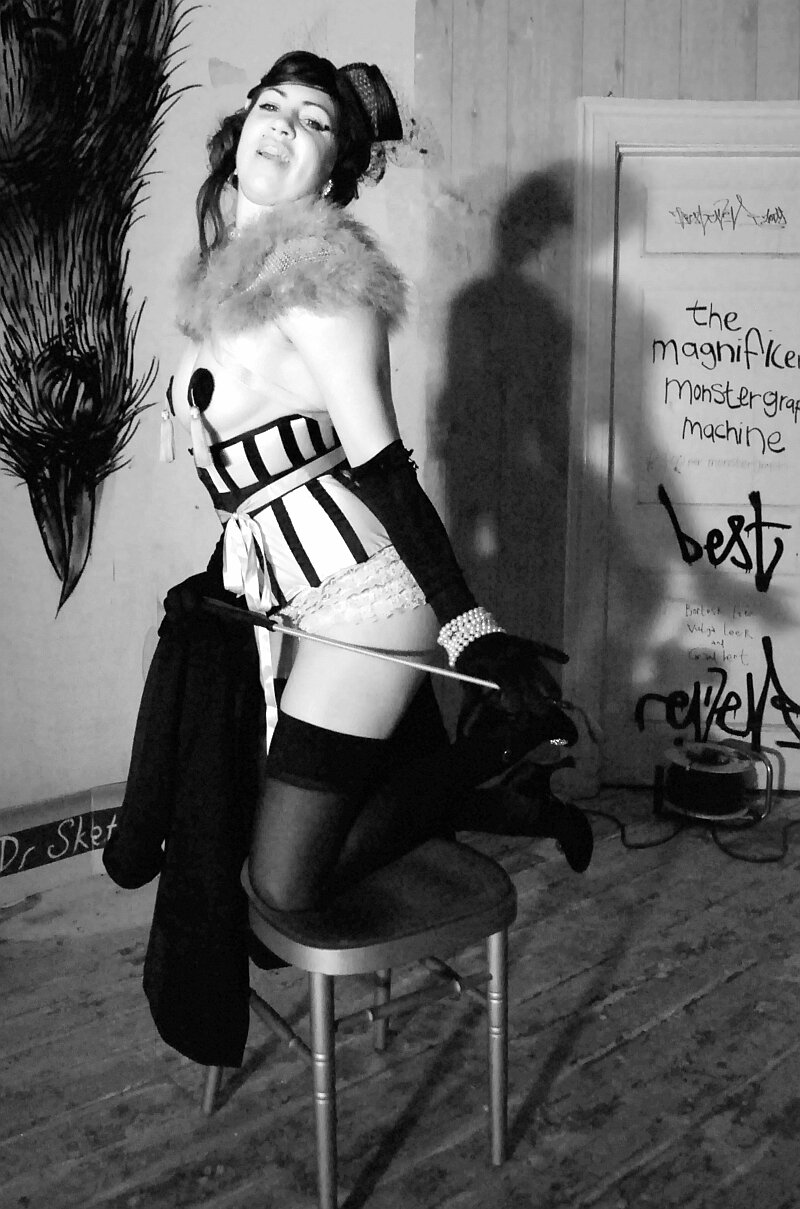
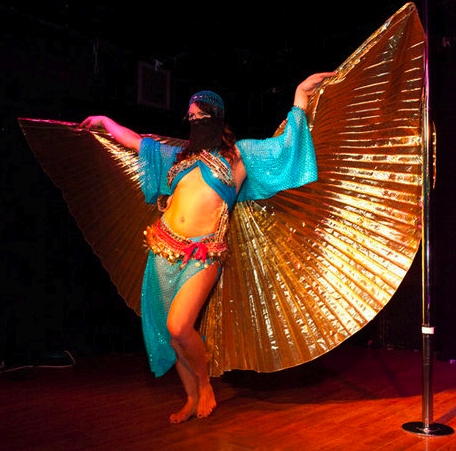
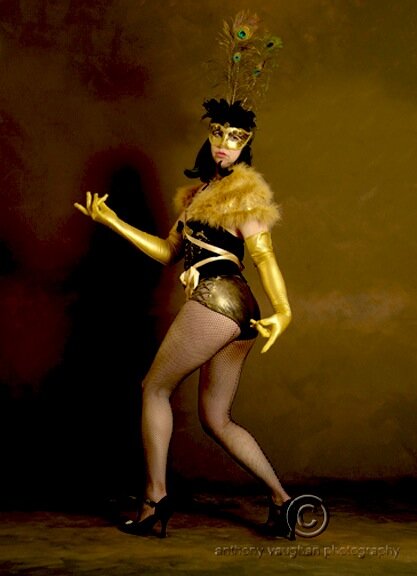
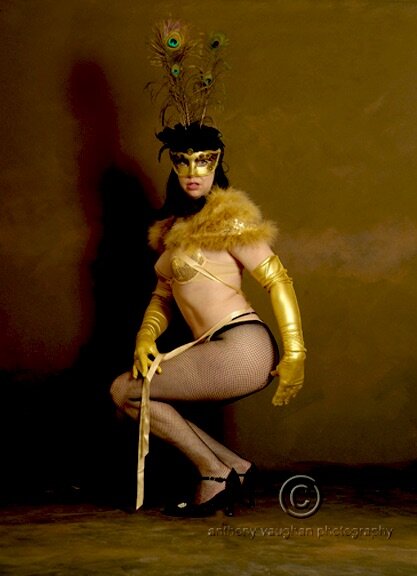
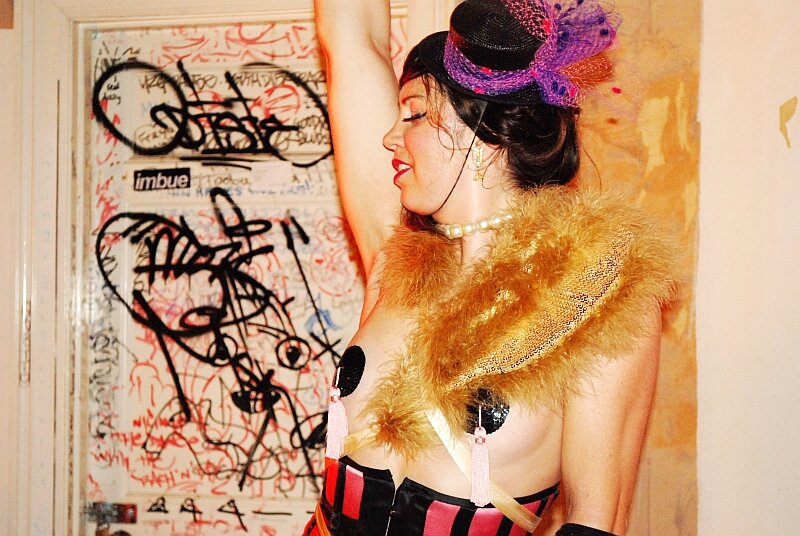
“I loved my work so much”
Above: Doing a job I adored with a passion. The freedom to express myself through dance was always something I enjoyed and it played a vital role in mental health too. Being able to move my body and express it creatively was key to my happiness. I felt very sad that I never did get to perform four of the acts that I’d put together, and created the audio and props for. Look out for some of these via ThriftVIP in the Depop shop, and see my article about one of these outfits, having been purchased by a Thrift Lover, that evolved into an article for my ‘In The Frame’ series.

I became a former shadow of myself. Who I once was had left me for a while, and I had to find a new me, a way round and a new reality. I always had hope that I could realise my full potential again. After doing mainly physical jobs my whole life, I found it really difficult to feel fulfilled in a more sedentary role, but writing is also a joy, so here I am. Plus I’ve enjoyed the styling and sourcing aspects of setting up ThriftVIP when I’ve been able to. Turning a hobby into a business (although one I’d not been able to do regularly, reliably or consistently as you would with a hobby), seemed the right thing to do and finally putting my degree to good use felt like a great achievement. Recognising achievements no matter how small is so important.
Road to Well-being
Looking back through all my notes and copious amounts of research, filled out tables of rest and activity to try and find a baseline, notes about relapses, bouts of constant viruses, soul searching, trying to heal toxic relationships, and numerous letters where I’ve researched and paid for alternative treatments, I feel at a loss. I am an anomaly to the medical profession, but I know I’m not alone. I’ve tried to get specialist treatment on the NHS, or anything to help over the last 27 years, but all that’s available is pain management and pacing, CBT or Graded Exercise therapy which is so disappointing and insulting (not to mention dangerous and harmful to those unaware of this), that nothing has moved on or progressed for us.
I pushed myself, to great detriment, and later realising this has probably caused long term muscle damage, pushing myself when I wasn't ready and my body not able to recover from even small amounts of exertion. I now find the detrimental effects of exercise so profound that I cannot progress fitness anymore beyond careful rest days before and after exercise or pay the brutal consequences. I only just learnt about the flawed PACE trial in around 2018/19.
The first and only thing ever offered to me that was available were anti-depressants. I was not depressed.
Now I am learning so much more about how this disease has been psychologcialised over decades. What Psychiatrists need to know I recently also watched this brilliant video: The Tangled Story of ME/CFS
Also see A broken Battery on You Tube or across socials for more digestible video content. His January 2026 article offers invaluable insight.
I found this amongst all the paperwork, along with other articles I’ve cut out and kept over the years. I knew I’d saved an article written about me when the M.E. was at its worst, prior to a later additional (informal) diagnosis of fibromyalgia. This was in the Brighton Argus newspaper, in the article entitled: ‘Even Though the Mind is Willing to Recover, the Body Won’t’

As I go through all my paperwork in readiness to send my next award review form for PIP, I found the article. This is a snippet of it from The Argus 18/05/09 - I can’t find it in the online archives, so I’m glad I kept the original. My face looks so puffy but this was perhaps due to constant swollen glands. Later after receiving Phytobiophsycis treatment, painful swollen glands were pin-pointed as being left over viruses in the body, most likely from the Epstein Barr virus and possibly the Polio vaccine from the sugar lump vaccine my parents may have had. Nothing definitive though. Still always questions and very little answers or scientific proof in black and white. Illness, it seems can be a complex puzzle that takes a lifetime to solve.
I’d also like to add here that the pictures I provided for them to use showing what they call my ‘younger and fitter days’ were taken only 2 & 4 years prior to the onset of fibromyalgia / possible return of M.E.
In the left pic is me during dance teacher training in 2007, and on the right is when I was lifeguarding in 2005.
Now in 2020 as I search their archives, there’s another recent one too and many more besides over the years
I also found this article. This is the one I found that I’d cut out in 2010 and still have the original cutting for. It was so scary to read this at the time as I was stuck in the worst of it myself, preparing to sell up and move house with great difficulty and still trying to find a cure for myself.
So many stories and still millions missing from life. Read about #MillionsMissing in America and the fight for global health equality.
Millions are lost in earnings, due to lack of treatment and therefore become a strain on the economy too.

Deep times come more often than I’d like, but every time they make me stronger
It is believed that Florence Nightingale also suffered from ME/Fibromyalgia, along with PTSD from all the traumatic work she did during wartime. Having these conditions has also led me to do a lot of research on the mind-body connection over the years. I’ve been fascinated by neuroscience too, including the works of Dr. Ramachandran such as ‘The Tell-Tale Brain’ and his mirror neuron theory. Seeing as the condition is neurological, it astounds me that there are still no referrals offered for this type of specialist, or even for brain scans to find out more in patients. This is most likely due to cost.
The Divided Mind by John E. Sarno was an interesting read, back in 2011, although the physiological element that exists in patients is yet to be fully explained. I realise now though that it was yet another psychological approach to a much larger picture. It seems many practitioners including private still follow this type of outdated approach, informing many aspects of healthcare, including osteopaths I’ve come across. it is sad that the mind seems narrowed towards these old books when there are new ones out there and new science. CPD anyone?
I also found this research as my new journey started with uncovering more of the picture of my own disease when I originally started this article in 2019….similarities with the AIDS virus:
At the current time, a comparison between treatment and care of HIV/AIDS patients and ME/CFS patients is reasonable. Both are chronic conditions, with immunological underpinnings. However, whereas HIV (human immunodeficiency virus) has been identified as the cause of AIDS (69), several viruses (e.g., Epstein-Barr, Ross River, and Coxiella burnetti) are associated with the onset of ME/CFS (70). And there are reports of non-viral, physiological abnormalities which may trigger or contribute to the symptoms of ME/CFS (71). It is therefore possible that identifying the causative agent or agents for ME/CFS may take longer than the time needed to discover the AIDS virus. But whereas the HIV/AIDS virus was discovered within a decade, it has been more than eight decades since the description of ME/CFS, and the causative agent or agents have yet to be identified.
These findings never came to much but what is interesting now is that another paper has been published since the coronavirus SARSCOV2, which talks about similarities again with HIV mechanisms.
And of course, for M.E. we had the DecodeME genome-wide study, with results landing in 2025 - a massive step in science towards identifying genetic signals: ‘Overall, DecodeME shows that ME/CFS is partly caused by genes related to the immune and nervous systems.’
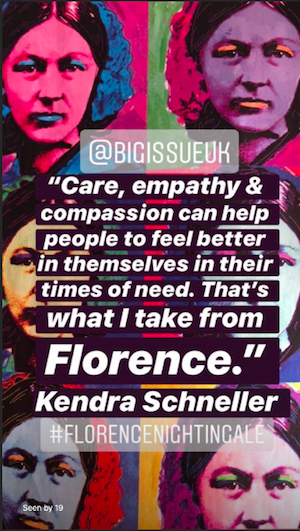
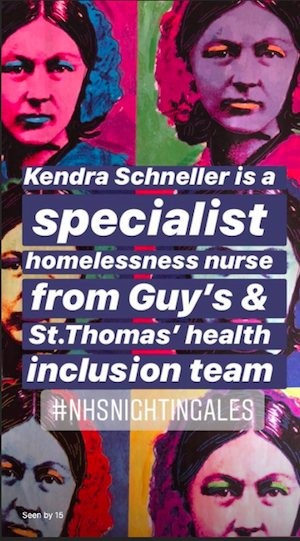
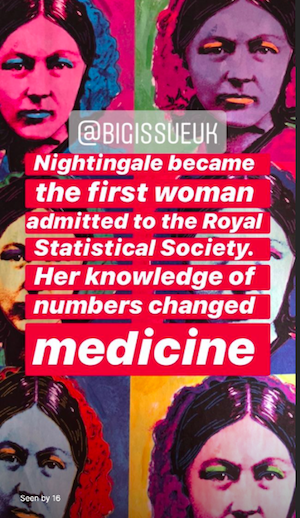
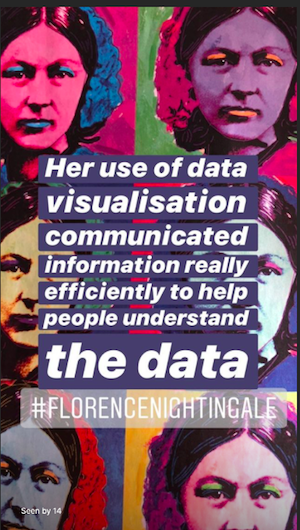
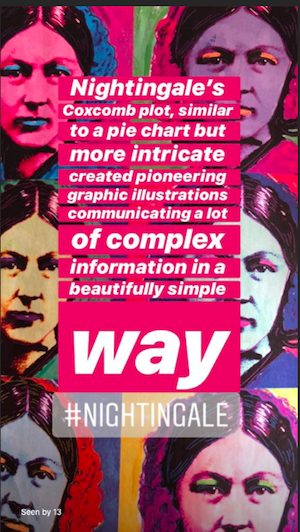
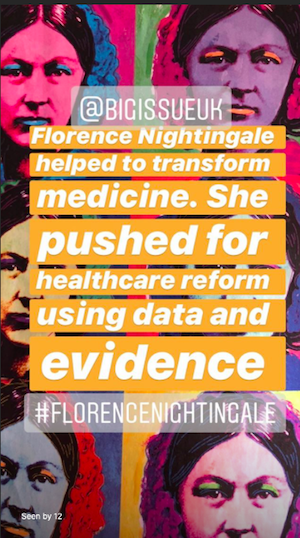
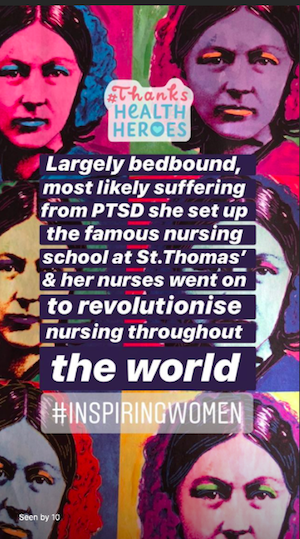
Above: Some posts I did on the ThriftVIP instagram story from an article I read in the Big Issue that champions the work of Florence Nightingale. A pioneering woman who made history whilst dealing with an ongoing chronic health condition
The discovery and detection of a retrovirus virus, XMRV in the blood of patients with ME/cfs provides some indication as to some origins of this strange illness, however because of its extraordinarily complex nature, scientists are still working on it. Read more about it here
After further reading of various papers and documents I come across during my time spent unable to do much else other than try to understand this awful disease; I now understand that EBV is an enterovirus in origin. I may stand further corrected in time as research (currently pitifully funded), is ongoing.
Optimism & Positivity - without these a lot of people give up
No amount of positive thinking, manifesting, affirmations and use of the law of attraction has helped me to rid myself of this neuro-immune disease, and I’ve spent years dedicating a lot to that approach. It can help us to cope with every day life and has it uses, of which can be very helpful and comfoting at times. I’m implementing some of these myself as part of some sessions I’m hoing to start, to help support others in the same situation who want to connect and move a little, very carefully whenever they can.
I realise now, that the psychologically attuned narrative and approach to symptoms is something created and derived from psychiatrists attributing their own ideas to a disease they didn’t and still don’t understand, not backed by science or evidence. It is opinion. That it is not my fault, but comes from the dangerous narrative from those I thought were supposed to help me, those I believed were there to help my health.
I am still a deeply spiritual, feeling and passionate being, but that is not something I would conflate with my experience of post-viral illness. It can be very helpful for some aspects of dealing with symptoms as I worked out myself without any lead from healthcare, but it is not where the focus should be.
The most debilitating parts of the condition I now know are beyond my control or behaviour and are physiological; such as severe bouts of insomnia, dysautonomia, pain due to physiological mechanisms I have no control over, and often unrefreshed sleep when I do sleep, not to mention the 50+ other symptoms I experience, especially neurological, like brain inflammation and mast cell activation / histamine issues. The dopamine related aspects have become more apparent since recent infections too, where the RLS becomes very bad.
‘Just think positive’ was the first reaction to my disease, which definitely helps yes, and what I’ve often had to do to help myself cope, to stay alive (this requires endless optimism and a sense of humour to boot), but it’s unlikely you’d say that to anyone else diagnosed with a serious disease as being a particularly helpful approach; but this is what I experienced, in part because of the psychological narrative, which has been one of the most harmful aspects of living with it, and actually causing mental health problems as a result.
I don’t think ‘just think positive’ is actually helpful for anyone dealing with anything serious, and especially for those with mental health too, yet it was one of the first reactionary responses I had from a few people around me at the time, who obviously thought I was perhaps a bit low or depressed and just needed to buck up my ideas and get on with it (all so toxic when i look back now to how far we’ve come since mental health has been talked about more too). Even so, saying that to someone who is depressed is extremely unhelpful too. These people are just careless ignorant minimisers. We can all learn I suppose.
I’ve been guilty of saying ‘I just have to keep smiling’ to someone else who had been going through a mental health issue because it’s what I’ve had to do to cope with my disease because there are no other treatment options for me and if i keep smiling or laughing, it informs my nervous system that I’m ok and sometimes quells any irrational anxieties due to the stress response being dysregulated. But I realised that when I said this to someone else, I was doing the same thing to them because it was my own toxic coping mechanism because there is currently nothing else available, and I feel that as long as I can still smile fairly often, I’ll be ok, I’ll cope. It didn’t translate that way though to someone else. I wasn’t telling them to do that, I was talking about myself but because it was what i was doing to cope with my disease, it kind of projected that onto them too which was damaging for them to hear.
This is why we need systemic change across the board in healthcare. And to change our attitudes around neurodivergence for example because there’s still too much shame applied to so many things that don’t fit with societal expectations in an ableist neuro-typical world.
What psychiatry has done is actually cause further problems for people with M.E. an illness so serious that it can put you on a feeding tube in a hospital.
Thinking or behaving differently does not stop the symptoms from happening. You find that out after 16+ years of practicing it. I just try to avoid stress as and where I can (almost impossible), and i never give up visualising my dreams, well what’s left of them. I appreciate soothing vibrational sounds, ASMR, sound baths and meditate when I feel disciplined enough. Regular body scans and vagus nerve stimulation can be helpful too. Practising gratitude is also good, although often difficult when you feel absolutely vile on no sleep for nights on end. I always try to find a silver lining somewhere though, even if it’s sometimes a forced behaviour (that might be toxic too though forcing it).
I tried journalling once but I prefer to write as and when I can to make it more enjoyable and spontaneous which is something else you lose most of with this disease; rather than seeing it as a daily task, because every day is different and I can’t always write every day anyway. Mostly, instagram is my journal as typing is quicker and easier than always writing and I can add other elements to express myself better such as images, sound and video. It also allows me to accurately record my symptoms in terms of writing a diary to keep an eye on symptoms and any patterns that might occur, and is useful for when I need to provide examples for DWP reviews.
I’m trying to reduce screen time as and where I can and it’s a habit I need to carefully monitor with myself. I often have to switch my phone off completely to avoid temptation and for rests. Overall, I write a lot, from poems and lyrics, to articles and stories, and about other people, which enables meaningful connections where they’re often missing in everyday life. It’s important to feel like I’m making a positive difference somewhere, somehow. I love being creative when I can, especially moving creatively to music, when I’m able.
To this day my personal journey continues and most months I often feel like I’m simply existing, not living, although there is always hope and optimism. It’s the one thing that’s kept me going, along with a sense of humour as is the key when you have any life changing condition. This helps to get you through the day, one day at a time. Planning socially is not often something I’m able to do and I’ve got used to the disappointment of missing out on things and losing ticket money due to the sudden onset of symptoms. It’s taught me to enjoy the current moment more, live in the now, and appreciate the simple things I have, more often.
The downside of it was when I didn’t want to miss out on something and felt caught between physical pain and mental gain, I often used to drink when I knew I was pushing it, to numb the pain. It’s a constant battle of weighing things up, knowing you’ll suffer the consequences, yet sometimes worth it for the mentally stimulating experience and social fulfilment.
I used to push myself to try and be normal, in an effort to keep up with family and friends, to keep the pace of everyone else. It took a long time for them to understand. Probably about as long as it took me to accept it too. I used to make myself ill, visiting people when I made trips back home and then suffer for it for weeks on end afterwards, alone. Now I put myself first more often. I’ve stopped hiding it away now as I did for the years I was bed bound , then mainly house-bound and isolated over 3 years; alone in my fight, to get help, fill out forms, and obtain crisis loans as suddenly no money was coming in to pay my mortgage. A desperate letter to my local MP saved me at that time, helping me to get the benefits I struggled to get (and still have to fight every 2-3 years for). As if it’s not bad enough having the condition, being vilified for it by others, including the system that’s put in place to support and protect us is just another cruel blow. No one would ask for this or chose this life. I was lucky that the MP I contacted in my ward had a granddaughter who also suffered with M.E. so he understood my plight. Now I’m made to relive this whole experience every few years just to keep my PIP. It’s another layer of trauma that can impede progress for up to a year if you have to appeal due to the negative affects and the stress of it all exacerbating symptoms.

Hang in there….As my mum says, “like a dog with a bone”
Always Hope
My mum later found a book called ‘Recovery from CFS (I re-named ‘The Book of Hope’ at the time as this was back in 2008 before I knew the full story and about the scandal and how cfs is only one small part of having M.E.), from which I found a therapy that resonated with me, so I decided to sell my flat, using some funds from the sale towards paying for this treatment and more following it. I still used it for years when I could afford it, but cutting out sugar has been more helpful I think since terrible gut problems since covid infections. Mum has helped me out where she can too over the years, wanting her daughter back which is all so heartbreaking. She paid for a herbalist early on (which I’m going back to again for anti-viral tinctures since learning more). Recovery from CFS might be possible but it’s only a part of the whole picture of MyalgicEncephalomyeltis. I learnt about the conflation of these two things much later on.
I was lucky I could do that and try something. I did it because it was that, or a case of staying where I was and just sitting on benefits, just being poorly and getting nowhere. Not an option, especially when you’re in your 30’s and want what others have at this time in life… a career, family and a fulfilling life.
I’d just had to stop doing a really physical job I loved, despite slowly getting worse and struggling after every class over the last 3 months of teaching. I wasn’t ready to just rest and I was following the NHS guidelines, believing I could get better if i just sorted my mental health and increased activity, because surely they were the ones with the scientific medical research knowledge. Coming home and collapsing in pain and severe fatigue after pushing my body, thinking it was just burn out and I could push through was repeated, until it was too late. Now I have to work very smart and listen to my body all the time, going against my natural personality and desires to enjoy all those things in life I want to. I do not trust the NHS any more due to this for M.E. as they haven’t yet caught up on the science and there are no safe protocols in place for us while we are in these environments. We’re still campaigning for a protocol.
It’s soul destroying not being able to be who you really are and want so much to be. You have to stop yourself from being too excited in case it makes you poorly, or from behaving how you might do if you weren’t ill and that does some damage to your identity and self belief, because if you can’t be yourself, then who are you anymore?
It oppresses the very core of being who you really are.
Now I use some of the money I get to pay for CBD, supplements such as COQ10, Selenium, Magnesium, Zinc, Vitamin C, D, B, Phytobiophysics, (not any more now) Seaweed, vitamins, (now creatine and many other alternative treatments and supplements and anti-vrial herbals known to help, which are changing all the time as new research papers come out for Long Covid too), and those which can alleviate some of the symptoms from time to time. I’m always experimenting and pushing my boundaries, in a way which works for me, not set by so-called health professionals who have no idea of how to treat people with this condition. I now take around 8-12 supplements every day just to maintain a quarter of the functioning that I had before.
Wim Hof breathing techniques can also help to alkaline the body which seems to help the stress response on occasion and humming for the vagus nerve. However I’m not able to do these (intense breathing exercises) very often as they require putting the body in a state that can also sometimes be detrimental for the nervous system in my case, but good as a type of emergency measure to distract and alkaline the system. I had to give up the cold water immersion through cold showers and couldn’t do this regularly enough due to the flu -like symptoms, temperature dysregulation and feeling cold and shivery too often. I’m looking at Buteyko breathing next and Tai Chi again, alongside the usual self-adapted movements i incorporate for myself.

Image: Michal Wozniak
There’s more awareness for these invisible conditions now, but sadly STILL no new treatment options available on the NHS apart from pacing courses, graded exercise techniques (dangerous due to potential major relapsing as a resulting factor), and pain management. I’ve had my fair share of these and worked most of this out myself (pacing) before I eventually got any help (I was pushed before I was feeling well enough, to commit to PACING & Graded Exercise Therapy - GET when I was at my worst), and made to go on a Goals course as a stipulation for receiving sickness benefits (as if I wasn't determined to get back into work); then I was always just offered pills by the GP which I refused for the first few years as I knew this wasn’t the answer. I wasn’t depressed! I’d been happy in my work and life. I asked for someone to talk to about what was happening to my body because I was scared, but was told there was no point putting me on a waiting list for mental health services as it was at least a years wait. This gave me little hope or encouragement. I eventually got phone counselling when I was still housebound which was something, and led to more face to face therapy a few years later. And this is when they were telling us it was all in our heads, but offered nothing else afterwards when the GET and CBT didn’t work. I had to keep asking for help as my symptoms weren’tt going away. I was left to rot.
I also asked for physio around 20 years later in the hope I could start building my muscles up again but the physio was unhelpful and dismissive of my symptoms and the conditions I’d been battling with. I’d been a dance teacher so thought I might have been offered at least some useful help to be able to then help myself. It makes me wonder why these people work in healthcare. They often don’t educate themselves or see the lived experience, just work from text books a lot of the time. Props to those who do.
Since then I’ve had another go with physio after new painful symptoms but it’s all so disjointed in relation to the big picture and an holistic approach. I actually had to walk out of a Flippin Pain group prescribed on the NHS following new symptoms in both arms, being told it was Tennis elbow. I couldn’t even do the regular exercises, then was made to sit and watch how to reprogram my mind from the pain, I mean I’ve been doing this as a coping mechanism for the last 15 years, through researching my own techniques. Talk about insulting. This was not suitable for a person with MyalgicEncephalomyelitis. Repetitive actions or movements can cause decline and PEM.
I kindly sent the company an email with links to educate them, including Physios for ME information which they accepted with thanks. Nothing has since changed though. This should not be down to us to spend all our time educating so-called health professionals, especially when we are receiving nothing new in return. When do we get paid for doing this? If you all want to finally learn about M.E. pay us, those of us with lived exeperience for decades. We want to be of value. I have had no follow up since, unsurprisingly. Later I asked about connective tissue problems and it turns out I have some hyper-mobility issues, but nothing diagnosed because there are no proper tests. That’s it. Another dead end and no help and still no treatment plan 17 years on since last major relapse.
When I relocated to another area, I kept seeing some amazing projects on local news stories about being able to spend some time with animals (horses in particular), via social prescribing (the closest thing I could think of to the benefits of my own pet companion), but when I enquired I was put onto a call with this awful woman who proceeded to tell me her own story in great detail, but then more or less railroaded me into all too famiilar NLP techniques (many of which I’d already done to no long term positive outcome), asking me if I really wanted to get better. I was absolutely dumbfounded. Not what I’d asked about or phoned up for. Shocking. I’d already done so much work now on this side of things, yet experiencing the same physical symptoms. Yes dealing with the traumas helped my mental health but has not taken away all the other physical symptoms since viral infections. The psychological narrative really has been ingrained into so many diseases.
I digress, and yes this is a messy and long account, much like my treatment and life living with M.E. / Fibromyalgia / PTSN, known as PTSD. Back to my story again…
I eventually gave in to the pharmaceutical option after developing severe anxiety due to not getting the support I needed at the time, and dealing with noise issues again. This had all triggered a PTSD type reaction and I never considered at that time that I might have PTSD. It was a result of the noise and threatening behaviour I’d endured where I’d felt unsafe and in a state of fight or flight for a prolonged period of time; alongside several previous life traumas that I was affected by and was to find out about later. The issues I’d never dealt with. I wasn’t really aware of PTSD, but looking back, a lot of my reactions would be well explained by this diagnosis, or at least my body’s physiological reaction to it. This is why I thought perhaps it was all in my head and went along with all the damaging GET and CBT treatment, unbeknown to me it would actually cause more harm than good. What I needed was a specific type of therapy for these things.
Rather than me having to go into intensive therapy that might not have even been necessary I could have been educated on what my body was doing and how to calm it down first, not aggravate it through therapy, or attribute my thoughts and feeling as invalid and to CBT them away. I had many types of mental health talking therapies before I discovered the right one.
It all exacerbated my symptoms and gave me so many nights of insomnia due to my central nervous system being on hyperdrive because of the stress of it. I wish someone had noticed this and suggested a different way. But no one in the NHS seemed to know how M.E. worked in these types of settings (psychiatry). I did find some techniques of my own through alternative therapies, meditation and relaxation techniques, but even these could not counteract the state my body was in. I was that desperate I’d tried The Lightning Process which says a lot.
I now agree with Steve Topple of The Chronic Collaboration about Psychology not Psychiatry which are two very different camps in terms of psycholigising patients and understanding neurology, so now I’m going to call it PTSN rather than PTSD as this is a natural response of the brain to events such as these, especially those linked to medical PTSN though years of gaslighting, abuse and neglect, the impacts of which are far reaching for those of us with M.E. relating to family and friends-loss of and not being believed / ignored for years, being blamed and shamed. New research is coming out all the time with the brain linked to our immune responses, much like the gut biome. I can now decide that this psychologisation is the very sinister narrative of a few psychiatrists who believed they could control this narrative for monetary gain with regards to M.E. sufferers (all the links are here in this article for you to make an informed decision on that too). I do believe that I had some unresolved trauma, but only some of my physical symptoms could be attributed to this. With an intelligent and unbiased medical approach, our stories could be so much better. When ego gets in the way of science, it gets messy for those of us who are most vulnerable.
The delay of mental health treatment at the time actually gave me another layer of mental illness to deal with exacerbated by the treatment of those who find themselves at the mercy of the benefits system, towards those with invisible illnesses, over many years. All of the anti-depressants I’ve tried have never helped sleep either or relived symptoms, but I was made to go through a cocktail of them to eventuaully land on one medication that worked to a point for me, for sleep issues. I had to treat them like gold dust because I only got so many and still had to endure many nights with sever bouts of terrible insomnia.
It was HRT that made the biggest difference overall.
Most of the time anti-depressants just made me feel worse and wired. I knew this wasn't the answer. Even after agreeing to put myself through years of therapy I still have the same physical problems so it makes me angry that it has all been attributed to psychoanalysis.
I had panic attacks and anxiety over things like the traffic lights changing when I was driving and this I believe was due to feeling so vulnerable with pains in my legs, not knowing what was going on. My stomach would turn in knots if the traffic lights changed. It was an awful feeling of absolute dread and also very physicial, in the pit of my stomach. Like a gut-wrenching fear, played over and over again during the days and nights. Driving was difficult enough with this pain in my legs and I used to hold the top of my leg onto the pedal with my hand to help it as it would be painful to drive.
When I realised the options above were the only options available to me along with common sense pacing and management courses, which I’d already worked out myself during the first year or two, often to detrimental outcomes, I felt a sense of great despair. How else could I help myself, I thought.
I took what I could but none if it really helped much. It made it worse a lot of the time, alongside realising what a postcode lottery it was as to what help you got. I had a severe attack of anxiety at one of the CFS pacing groups after finding out one or two of the patients had received alternative treatments on the NHS and had managed to access hydrotherapy. I’ve never to this day been able to get any of this unless I’ve paid for it, which I have done over the years. My body had been hammered as I’d been in a physical job yet no one was helping me rehabilitate, just working on my mind wasn't working. And CFS I realise was a massive insult I was yet to discover.
I spent the rest of my time researching on the internet which can also be terrifying and damaging but it was my only other option. At one point my GP at the time actually suggested it. I must say I’ve learnt a lot about neuroscience and interesting studies from professors and their theories (if only these could be funded for clinical trials for people with M.E.).
I’m thankful for what I’ve learnt, and I’ve dealt with some of the hardest parts of knowing myself and my demons. I’m also glad I researched and asked for EMDR therapy which was extremely tough but meant I could rid those traumas once and for all from my life. It was very effective and intense but worth it. I just wish I could reprocess the remaining one, that of the stigmatisation of the disease I live with.
In the last 16 years, no GP I’ve seen has offered any updates in the medical world about these conditions, and I’ve constantly asked about CBD and THC combined, as possible treatments options since it became legalised as a medical treatment option since 2018. Finally in 2024 I got my first medical cannabis prescription. There are so many neurological conditions that could potentially be helped by medicines such as cannabinoids which already exist in our bodies, but it seems money and profit with power, rules over people. Then there’s the medical gender gap to contend with on top. I have to be very careful with this medication thought as it can heighten some symptoms too, so very small doses just for pain when it hits hard.
So, I will continue to spread awareness and campaign for myself and all the others forgotten and untreated with this life changing condition. I’ve been forced to work on my mental health and have now done years of intensive therapy, yet most of the physiological symptoms remain (with new ones since two covid infections). I’ve also paid thousands and now had all of my almagam fillings removed too which has helped me feel lighter, and possibly benefiting me in other ways, but I am still having to take many supplements just to function day to day. it’s so costly too and none of this has been prescribed to me via NHS, other than anti-depressants which have also caused their own set of problems too, having done nothing to help other than cause a feeling of being more wired after any initial small gains, then two years of cutting up pills to get off one lot after weight gain and no great effects for me.
Getting a HRT prescription has been a new battle, with peri-menopause creating a double whammy concerning symptom management, admin and self care as it’s all such a mess out there. Hormones however do seem to have had some positive impact in certain ways, and the hormone testosterone has made a significant difference for me, although is hard to keep due to unhelpful guldelines and one-size-fits-all approach, rather than treating patients individually, so I may have to resort back to private for that again the way things are going.
An holistic dentist had found another possible cause of a type of sleep apnea which has never been picked up despite overnight sleep clinics in Nottingham- but yet more expense not knowing if this is what I need. I tried a clear mouth brace for 7 months which cut into my mouth so had to give up with that after what I hoped was long enough, and bought yet another book (6 foot Tiger 4 foot Cage or something like that), on recommendation from said IAOMT dentist, which cost me £18). All very well if you have endless funds for continuing treatment in that one area of a whole body that needs investigation.
I had another apnoea test recently too in 2025 but nothing has yet been followed up. Again it’s all so exhausting and all separated. I’ve asked for yet another referal, now for dysautonomia as I discovered that Dr Rae Duncan is informed around post-covid and it’s an opportunity to see someone who might understand, yet it all requires such a lot of work around getting that appointment and to keep following things up in all these separate departments in an NHS that is not coping well any more. And is also not safe with no protocols for us and no clean air mitigations during this ongoing pandemic.
The M.E. community, mostly on X and instagram have given me the most hope, and are now my go to community, the place where I spend most of my social life and days cooped up when I am housebound.
There are some amazing people who are working on great projects for us all and I will mention them here:
Sally Callow - ME Foggy Dog - campaigning for protocol and offering NHS medical training in Myalgic E Stripy Lightbulb CIC
Steve Topple and Nicola Jeffries - THE CHRONIC COLLABORATION -campaigning and awareness, journalism and protest (see video below) - unfortunately they had to make the decision to halt work on this as it was impossible to sustain with all the funds needed for their work and for their health, especially Nicola’s health. Be sure to check out their instagram and hEDS Zebra Challenge campaign which has been enlightening to say the least.
Daniel Moore and Dov Zeller - Post-Exertional Mayonnaise Podcast / YouTube Channel (see video below-I urge you to also watch the interview with Dr Speight and Jennie Jacques)
Jennie Jacques ME advocate and actor, campaigner (see video below)
Chronic Illness Inclusion, GO BLUE for ME and many more across socials
Alos be sure to follow on X ….Tom Kindlon, Dan Wyke and Royal Free 1955 ( ME/CFS Archive)
And since the advent of Covid-there are new advocates who believe in joining forces for change…
Crunch ME - Ror Preston (ME since 2018 so prior to pandemic but now exposing statistics) Lead data scientist at Visible (health device)
Dr Claire Taylor and Naomi Harvey speaking out and supporting our communities
A Broken Battery - a really useful resource from someone with M.E. who seeks out all the juicy bits and helpful explainer videos -the place to look for historical narratives, news stories and more besides, a real gem of information in easily digestible videos if you can do screens. Find Adam across most social media as @abrokenbattery.
I haven’t included all the links to these people because it’s all exhausting enough but be sure to check them out and show your support and solidarity. There are new links in my other Wintering articles too, and much has changed since the pandemic so there are links to other post-viral studies there too, alongside the emerging comorbidity links, known about in our community for a while now.
Then there are people like David Tuller where many of us have donated to his studies over the years. His close ties with Alem Matthees helped to expose the PACE trial. You’ll find him on YouTube too, speaking with others in our community including scientists, physicians and campaigners.
Valerie Eliot Smith, lawyer who has done a lot of work around this disease too - find a link to her website (as a resource only now) ; RoyalFree1955 (X/BlueSky), another account sharing historical data. Their website looks at the last 70 years of the disease, with access to once hidden documents in National Archives.
What we need is joined up thinking and charities involvement in supporting those above to demand policy and legislation. Centres for complex chronic diseases like Mount Sinai, Bateman Horne and Open Medicine Foundation. Grass roots level is where we suffer and need help, while young women are dying in hospitals across the country. This is a global problem. See also Unite To Fight and MEResearchUK
If you are looking for some real insight into the lives of people dealing every day alone with severe M.E. then take a look at this beautiful and poignant film by Anil Van der Zee, and make sure to watch as Grigor his feline companion gives a knowing look and love at 11 minutes in; it’s a priceless meoment, especially if you know how it feels to be trapped in a prison that is home.
Another advocate I’ve found only recently is Alice Ella, she’s amazing. Researching more now as I update this article. I keep finding stuff I’ve never seen, like Alice’s appearance on First dates, wow a programme I’ve watched previously thinking “I wonder if I should go on this to find someone because it feels fruitless finding someone willing to understand and acknowldege me.”
And as I watch Alice, I realise this was the first year I was properly attempting to make my hobby a business, 2017. I was in a relationship then, but it was a toxic one and made me more poorly (another effect of being isolated and vulnerable, you attract those who can be harmful to you). I was grasping for purpose then as I always have and still am.
I wanted to add the parody Mary Poppins short video Alice has done as this was where I first found ItsAliceElla via Instagram when I finally started reaching out into social media (find it on her account or YouTube). Instagram felt like a safer platform, more forgiving, creative and open minded than Facebook felt, and there I found a community of amazing people, willing to talk about this like me, but who were making it entertaining and brilliant to spread awareness (unlike me), mine being more of the good, the bad and the ugly approach, gritty if you like. The earliest video on YouTube from Alice is below, but really please check out her Instagram here.
I’ve recently gifted one of the dancers dress outfits to Alice so you can see an appearance of it with a parody of a pop song. Alice most recently appeared on The Last Leg, singing - TWICE, once dressed as ketchup (2023/4).
Artistic Endeavours
During the time I was bed-bound, I wrote a little book, aimed at children, talking about a blackbird that used to come and sit on my window sill and sing to me. It was so special and the one thing that kept me going, hearing that beautiful Blackbird’s song. I’m still trying to locate that little sketchy book as I’d love to have it illustrated to help others, especially young people with the condition. I sent it to my cousin at the time who was doing illustration and looking for a book to illustrate, but I never saw it again unfortunately and didn’t have a copy, I was desperate and clutching at straws to be heard and seen with M.E.
Writing, art and music really helps, especially when you’re creative and have such an active mind. I also designed a cushion cover that was one of the many things I used to find discarded on the Brighton streets, perfectly good things that could be re-purposed. For the text, I used material from a jumper that belonged to an ex and some material from a silver skirt I used to wear during the 90’s. It bears the text ‘MUSIC SAVES’ because it really helped me to get through the toughest time of my life. Local radio station, Radio Reverb was like a good friend at that time too. It got me through many days and nights lying with a body like lead, paralysed in bed.

Above: a short video explaining some of the problems with the diagnosis and treatment of patients with M.E.
I wish this video and social media had been around back then, so I could have used it to help others try to understand too. That I wasn’t a hypochondriac and really enjoyed being a fit and healthy person in society until this stopped me in my tracks.
Future Proofing
Along with another (informal) diagnosis of C-PTSD/N, I now have a treatment plan for continued EMDR when I’m ready again. Well, I say treatment plan, its not, it’s a suggested note that I continue if I’m able to access it again (so far unsuccessful in the last 2 years since having to move again). If I can sleep enough in order to be able to cope with it, it could be of benefit with the trauma from the medical profession over many years , developing medical PTSD/N.
Update: I finally managed to access the EMDR around two years after relocating again, but had to have a course of talking therapy then mindfulness in order to access it again (I know). Then found out there was nothing left with these issues to deal with, apart from the obvious medical abuse over many years that is not yet possible to reprocess as it’s ongoing . So no need to have any more now. If I access therapy again, it’ll be most likely from those who get chronic illness and who understand the history and trauma surrounding M.E. such as Chronic Living Therapy. What we definately don’t need is any more careless approaches from someone who has read or learnt from the wrong uninformed person or training program, of which there are many out there grifting this very lucrative market.
Maybe I should retain this last trauma as a healthy fear to protect myself.
Last time over the course of a year, I was only able to have 3 sessions out of the 12 for EMDR because it affected me so badly (insomnia). They don’t always take into account that having a chronic condition can make this a more lengthy and intense process. I found out the hard way, facing it head on and suffering months of worsening insomnia as a result over the last 2-3 years of therapy. You take what you can get on the NHS and we all know how under funded and over-subscribed the mental health service has been now for so many years. The closet I’ve got to EMDR again is having 8 sessions of talking therapy, as above mainly to help me get through the physiological effects of peri-menopause, then eventually I discovered there were no more to deal with aside the obvious (as abovce).
HRT treatment through accessing medication has been much more direct and effective overall. I still had to buy off-license to access the third hormone to start with, as it was still only available to men. Finally I’m having it prescribed via my GP, after quite some time waiting and buying it myself. It feels like a constant battle to keep it though and the one-size-fits-all approach is harmful too with little movement around guideline levels. GP’s are very good gatekeepers, maming you jump through lots more hoops.

Image: Dan Meyers
When you have conditions like these, you have to do your own work, be your own advocate and be completely pro-active, because if you don’t you won’t get any help. You become lost, just another number. You have to be a fighter with endless tenacity which is hard when you’re exhausted and sleep deprived most of the time. It often feels like a full time job in itself, one that is slow progress due to limited time you can spend in one sitting. It’s also extra difficult when you only have one form of treatment (and only because you’ve pushed and pushed for it and been on a waiting list for months); that only includes one aspect of the condition. With there being no other specialist treatment available for the physiological side and physical stress on the body, there is no evidence to support any applications for continued support. You’re left with this body that doesn’t work properly, runs on dirty fuel, unsure of what to do for the best.
It’s a constant battle explaining to others, including GP’s where you often aren’t able to see the same one consistently. Now the DWP won’t even accept a doctors letter. Reports, care or treatment plans are the only accepted criteria from the doctor, so if there is no treatment available other than managing symptoms, there is nothing to show them apart from your own record of symptoms and diary entries which they often don’t take into account unless it goes to court (something I also had to go through). So, for now all I can rely on is the information provided from the mental Health team, alone which it seems is the way the psychs want it. To remain in this paradigm of psychoclogial narrative, when it is not. It’s one of the reasons I post about it and make records of symptoms as they happen on social media, which has become a tool for making recorded evidence as it records the time and date. It’s where I have to spend the majority of my time when I have to be still and rest, if I can deal with the screen and cognitive elements.
I used to write a diary on Patients Like Me but it didn’t offer the artistic freedom that other social media platforms do, and the specialists and scientists in their fields of research on M.E. I would not necessarily see there in real time.
The black squares on instagram and facebook have represented my darkest nights and mornings over the years, so I can easily see any patterns emerging, although I have quietened down a bit this year (2024) in an effort to spend more time away from my screens if I can. The gaps in dates often mean I’m unable to because I don’t feel well enough.
The lack of proper specialist treatment plans all make it harder to continue to receive government support, which in turn makes it more difficult to see a way forward in terms of work and becoming of value again to the working world. It feels like the DWP have shot themselves in the foot on this. To be part of society and to have purpose is what most of us that might stand a small chance, want. Attitudes however can take decades to change in the workplace, and the admission of being wrong from many big egos in the medical profession might take forever. A very small percentage of people with M.E. are able to consistently work. I cannot imagine this for myself yet, to find something where I can be consistent seems impossible, but I keep trying to solve this problem and have never stopped trying to do something.
The DecodeME study is also a positive as it can be utilised now by many other scientists in this field.
I’ve learnt that little has changed over the years from charities that seem to have gone backwards in terms of providing specialists in this area at grass roots level, because it seems now there are less not more specialists, and they are only just learning from long covid. They’ve had years to train specialists in this so I often wonder where the money I donated went. What happened there, I wonder. I am happy to see the further collaboration of Action4ME in some more funded studies with DecodeME, ad of course there are other organisations such as Open Medicine Foundation and Bateman Horne doing studies, and of course Polybio. MEResearchUK continue to do great work also.

Image: Danielle Macinnes
Soul searching during isolation permits a lot of deep thinking and over-analysing. Nowadays I’m able to be slightly more productive although not very consistently it seems, and sometimes I have months where I’m unable to get dressed much at all and have to mostly rest. On average I get dressed and out of the house around 2-3 times per week. Sometimes it’s more days sometimes less, and occasionally, not at all when in a relapse with severe symptoms. It took me 6 years to turn my hobby into what was starting to look more like a business, that I’ve had to let go of for now. Yet another heartbreak in my life of what feels like very little progress in terms of being productive and feeling anywhere near fulfilled in life.
To deal with that fear of missing out, It helps to counter-act this by giving gratitude for the simple bare necessities, like the roof over my head, safety from harm (apart from medical settings), water in my taps and access to delicious nutritious food. I am not in war or a major conflict situation, even though the medical induced anxiety makes it feel like that sometimes. I enjoy watching channel 4’s SAS programmes to remind me of this and watching it makes me feel better. I find it comforting. This is what it comes down to, comparing my life to those going through much worse situations, yet we could all thrive if we were seen and could access healthcare for our disease. We live in a well developed country with cutting edge medical care and high tech systems yet we are left behind.
I've found cooking to be very therapeutic over the last twelve years too, during weeks and sometimes months of isolation, living with a chronic condition. You learn that food is often the highlight of the day and something you can really look forward to and cherish, at least when the nausea doesn’t take over and you’re able to stand or perch or grate cheese for long enough. I’ve learnt what to eat more/less of too, to help my body. It's also the one thing you have some control over so it can feel like there is some structure in the day and weeks, with meal planning and preparation which gives a routine of sorts when nothing else can. When I’m able to cook properly, I often make it count by batch-cooking so I have home-made nutritious food for the days I’m unable to. My perching stool is my most utilised aid. I often pretend I’m running my very own cafe or restaurant, but just cooking for myself (probably the only distant dream I have left now), and often take extra care on presentation. With more thought there is also less waste too. Self love is one thing that will keep you going if you’re on your own.
Now I have ThriftVIP to continue to focus on in some small way, as and when I can. It cannot be what it was going to be and I’ve accepted that. This is not the end. Plus I have my registered trademark for a few years yet which I was very proud of myself for obtaining on nil sleep. I won’t let it go that easily.
I used to love using my organisational skills to write lists and ideas for potential future business ventures (and also because memory often fails me unless I write everything down). I’ve had so many ideas for it and I’d love to be able to work full time on any one of them. Sometimes my brain is so fast and full of ideas it feels chaotic with creativity so I have to slow myself down and try to remember not to push myself too hard, even just thinking about things. I have to let myself down gently, knowing it’s all just a dream thinking I could do them because of my physical limitations. I never give up dreaming though because realising it through others, you can sometimes make it happen. It often feels like I’m running out of time, but patience and knowing that it will, in time when it’s ready and I’m ready, it, whatever it might be, will be whatever it will, and is meant to be. That goes for anything I manage to do from now on. Anything more than the miniscule is a bonus.
There is so much I could do if I could work consistently. I have to accept that I’m unable to do this but it doesn’t stop me making it work in my own special way, to fit my condition. It does feel like I’m living in a totally separate world to everyone else, in my own little bubble. A world I’ve had to create within my limitations. That is a lonely place. But I now know there are many others in exactly the same predicament so I am not so alone in it. I never give up thinking about and looking for part-time work that I might be able to consistently do and maintain without relapsing; so I could perhaps work on both and have regular colleagues to converse with. I’m always looking at and thinking of ideas. Until then, these little crumbs offer a type of hobby, if you can call something you do inconsistently a hobby; but it did at one point feel like it was well on its way to being a great business. Or, maybe it was just something to keep me alive and give me purpose and a reason to live each day. It was always wishful thinking turning it into a business with limitations of a dynamic disability. I’m grateful I was determined enough to go for it, despite not knowing the outcome.
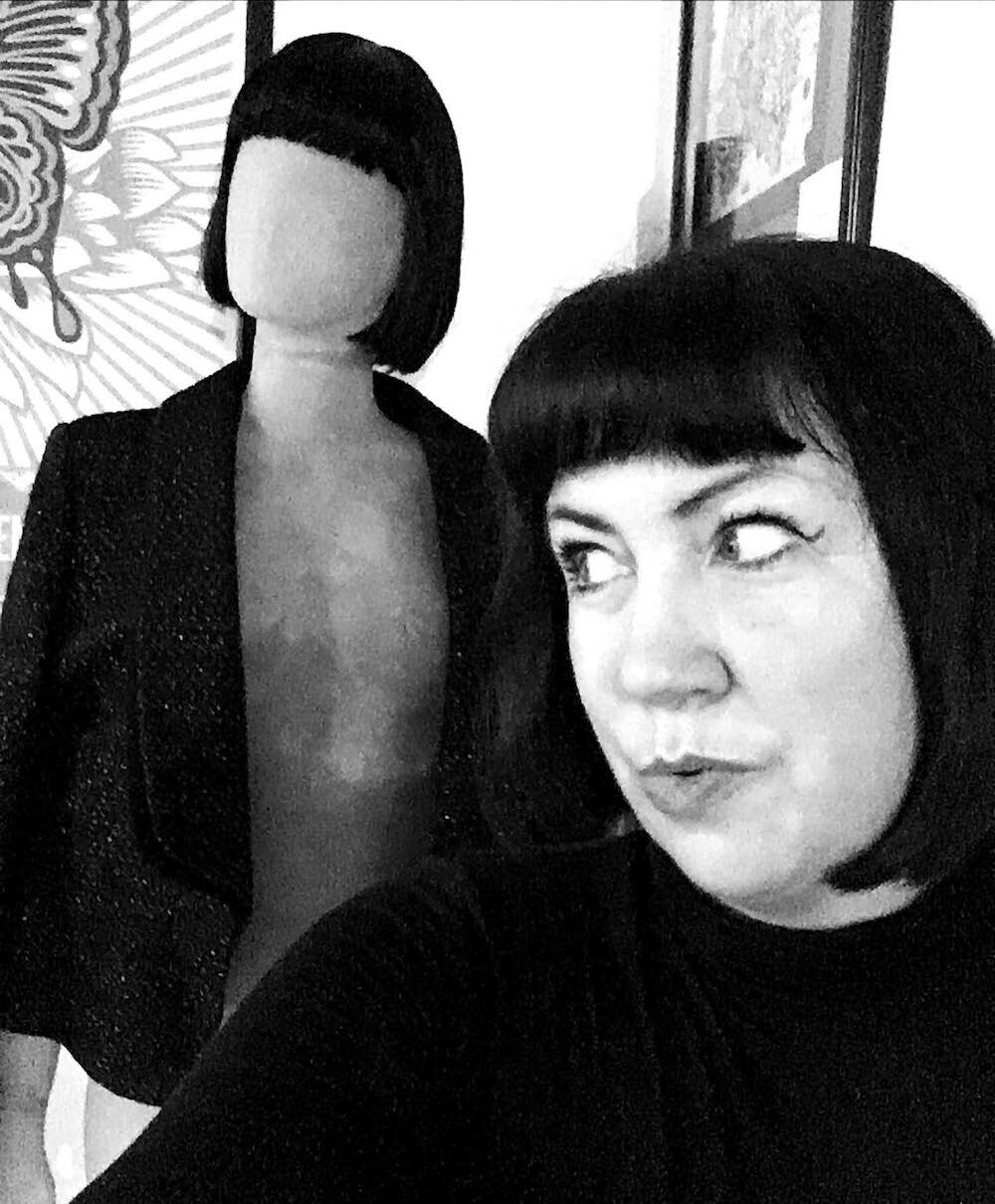
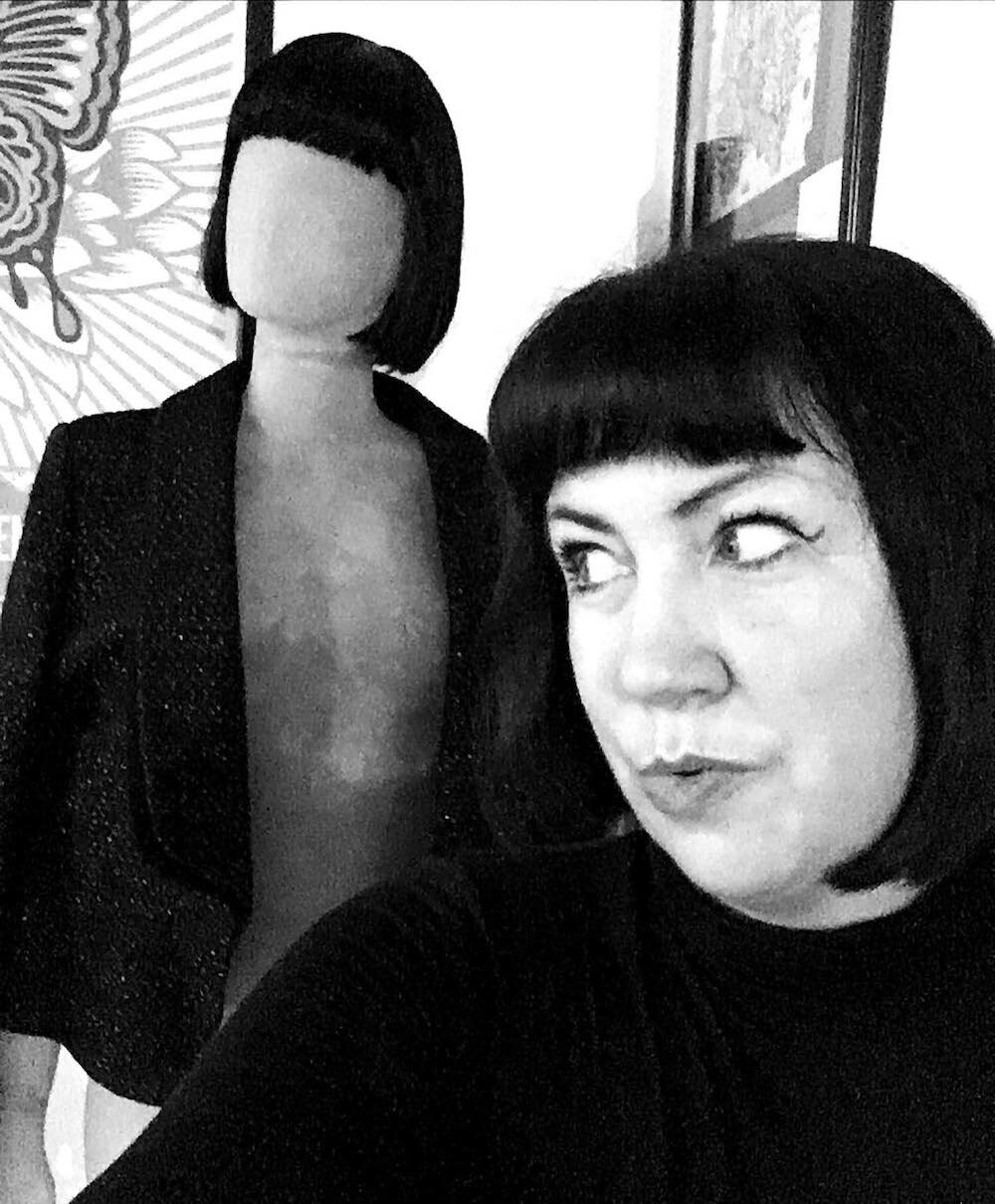
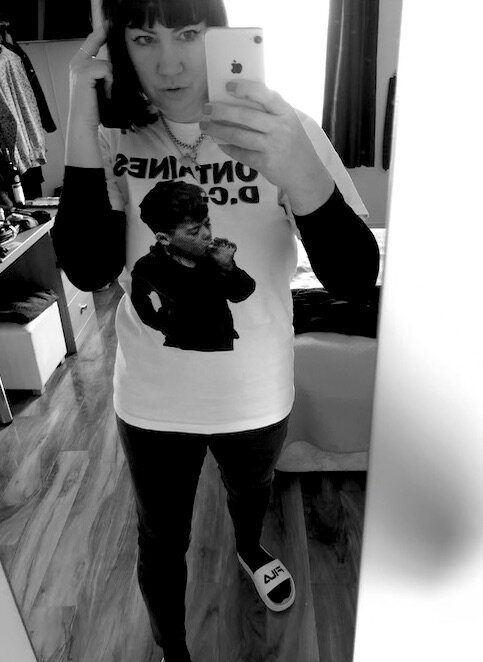
A Rock and a Hard Place
Those of us with these conditions who have reached this point, are caught between a rock and a hard place in terms of being unable to ‘work’ consistently, or at all; and generally enjoy life and fulfil those aspects which are supposed to help some conditions, supposedly fibromyalgia, such as exercise (note: this is for fibromyalgia only as exercise is contra-indicated in M.E. - can you see how upsetting that is to someone with both diagnoses). I love it when I’m feeling well enough to able to be a bit active, some crumbs close to what I used to do. Even knowing the consequences will be painful It feels like such a treat. The dire consequences can be unforgiving if I get carried away and enjoy it too much, or if I ever tried to do a full yoga class like a healthy person would be able to. I’ve tried and failed many times.
Take a look at the 2021 updated NICE guidelines for M.E. here
Just like when I go out on the rare occasion to socialise, there’s always a price and self sacrifice. It’s a question of constantly weighing up the mental gain versus physical pain. It’s insanely frustrating and infuriating. I used to talk to Célia my mannequin to offload. She really didn’t mind at all. She’s a deep thinker like me. We don’t talk anymore though, and I’m sure you can you guess why.
This is my life challenge and every one of us will face challenges throughout our lives, but with health, there should be help for us all. It’s devastating that we’re not treated with equal importance when they’re life-changing with regards to health, and completely disrupt your life as you once knew it (and continue to do so).
After all this time, I was still trying to find purpose and work again and the only way so far I’d learnt was to make a role for myself, which is why I was very slowly creating the ThriftVIP concept. This gave me purpose and was born from having to slow right down and adapt to a more sedentary life.
I was very lucky to be able to even consider setting up a business alongside a condition like mine where I go from mild -moderate or moderate to mild, never knowing when I’ve overstepped the mark to slip into severe or the danger zone, one virus away again. I am never complacent because that is dangerous.
And money is often a barrier. Without the latest technology too, it’s almost impossible to run a business of this type as it’s pretty costly and software needs constant updating. Thankfully I made a really good purchase of a Banksy print back in 2004 which I sold a few years ago. It helped to keep the roof over when my DLA was switched over to PIP and it was refused (even though I’d already been given an indefinite award previously). I had to go to court and I felt like a criminal, even though it was me taking them to court over it. You may also wonder how I acquired my own property as a single woman without a really well paid job. Well, that’s another story and one which might surprise you. It’s not a good story. The next article might give a little bit more insight into that as I talk about overcoming one of the traumas in my life, turning it into something creative and cathartic. It might not give you the exact answer, but you might just work it out.
It’s Not All Bad
In between the second and third periods of major relapses though, I managed to complete a degree and become a lifeguard, another of my favourite jobs in life, because of the sense of family and team work, and being active and physical. Being the best fittest version of myself was a joy, although I only just passed the swim tests due to breathlessness, having to do most of it in breast stroke with my head above the water so I could breathe enough to complete the 16 lengths in 8 minutes. Not to mention being on the beach everyday and general beach life, surfing a gentle wave and being on the water and in the sun (some of the time). Being younger then also helped.
I also promised myself the trip of a lifetime using some proceeds from the sale of my flat. I was finally well enough to go in 2014, four years after the sale of my Brighton flat, and 6 years since I’d been a dance teacher and performer for that short time (I started the performing side in 2005 which continued during my teacher training).
Even on the day of my big trip I was so poorly I didn’t think I’d make it. But I did and I absolutely loved it. Thanks to the help of my friend, Angelee who took me to the airport on the departure day. Angelee is the amazing girl I met at university and we originally started work on ‘Thrift’ in 2002, following our graduation from university.

Living my best life during the periods between major set backs. These memories keep me going. I can look back and remember that I had a fulfilling life doing work I loved and was able to exercise whenever I wanted. It was amazing to have that freedom.
Lifeguarding, Brighton 2004/5 - Most likely a Brighton Argus newspaper contributor. Feel free to come forward and I’lll add the credit. I also participated in a short film for Country Wide films during this time. If I find this I might share it on social media at some point.
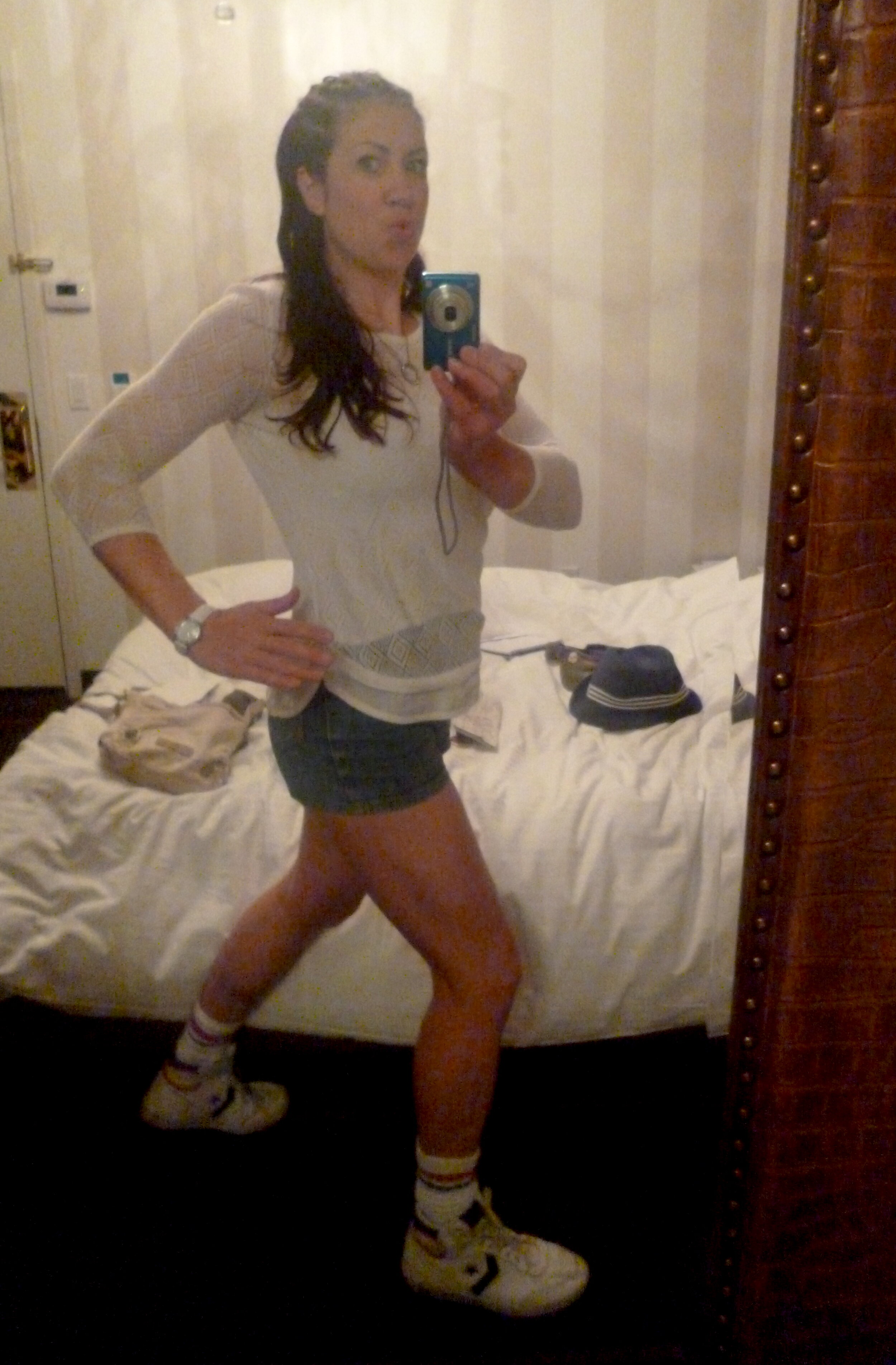
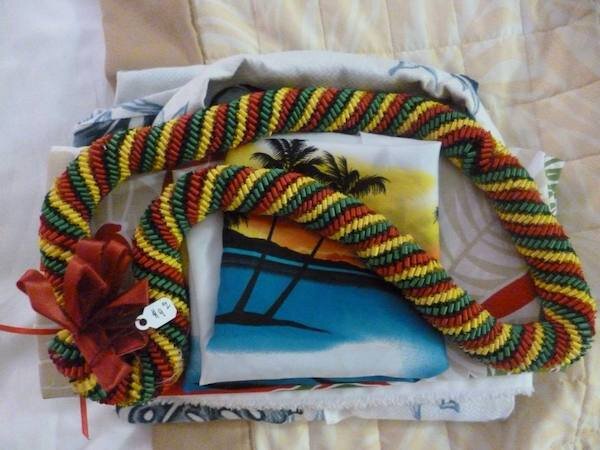
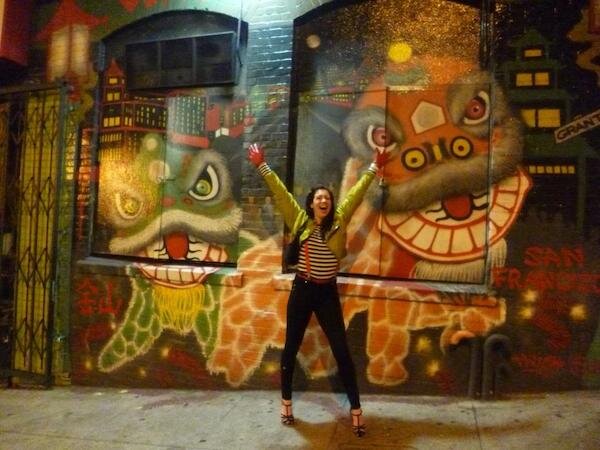
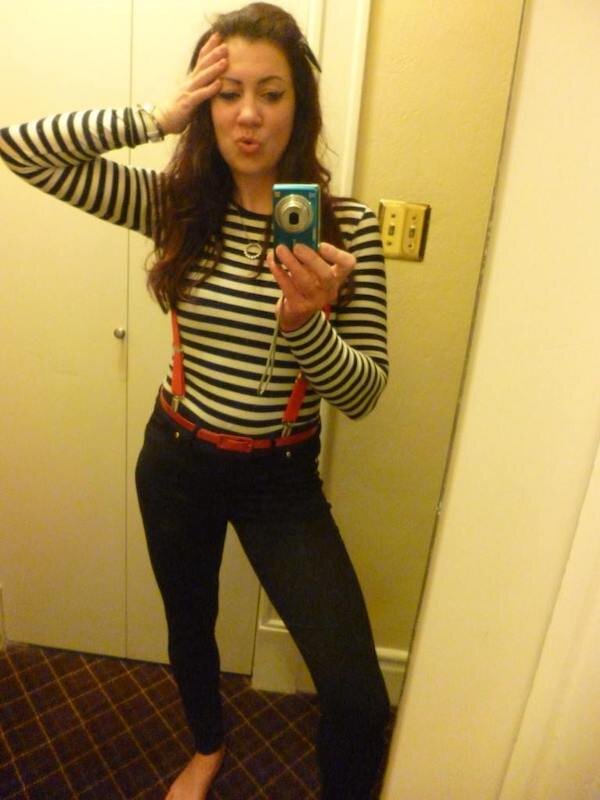
On the trip of a lifetime, taken during my stints on the Hawaiin islands and in New York & San Francisco. By the time I reached New York I was done in but I did so much and really explored as much as I could to make the most of this amazing trip. I feel very lucky to have been able to do this.
I remember arriving in New York and having to find central Park while I waited for my hotel room. I dozed on the grass under the watchful eye of a cop who I’m not sure was ready to arrest me or look out for me. Not only do you feel vulnerable sometimes being female, but also when you have a condition too. I really enjoyed making a small wardrobe work too for this 4 week trip.
FOMO = Fear of Missing Out Turned to FOMO = Fun On My Own
The sense of missing out was constant for around the first two to three years, where I became resentful and was unable to relate anymore to most of my friends and family, and most other people in life who didn’t have a chronic disabling condition. I still find this a difficult aspect of my life now, as all my friends have jobs, families and a social life, and can exercise freely (which is hard to listen to them talk about, especially when it used to be your actual job and you don’t get to do it even once a week sometimes, and not even how you’d like to).
I feel my life hasn't moved on that much and I feel a great sense of needing to catch up. Saying that, it has taught me great lessons in slowing down, taking time out and ‘working’ smart.
Another stage of grief was denial that I ever had this awful condition. That one that had stopped me in my tracks at 16 where I had to abandon my dream of acting and dancing on year two of a 3 year BTEC course, just about to take a play to Edinburgh, and again in my 20’s surely hadn’t come back again. I used to push myself constantly, to devastating effect and a cycle of boom and bust ensued, just to get to do the things I wanted and to see my family and friends. I have learnt to say no and put myself first more often now because I have to, otherwise I really suffer for it. It’s often a much lonelier place, but I’ve got used to my little bubble. The world of Madeleine. Sometimes it’s so much easier to avoid certain situations and people rather than have to keep explaining to others too, which is the result and tragedy of misinformation and ignorance. Not a healthy choice for someone who underneath this disability, is an outgoing and extremely sociable person. If only all disabilities were included in society.
I never imaged that I would see myself represented less and less on TV too, if at all, so now I’d often rather watch my community on YouTube than the same old narrative on TV programmes.
From being a social butterfly to now finding it harder to socialise because I’ve got so used to being alone, it’s like re-learning social skills again, being with others. I was looking forward very much to my doggie companion which I could have done with a long time ago, and right now, during those dark days and dawns. Patience, lots of patience learnt. Ive tried fostering twice now but cannot cope with the regular walks so back to the drawing board to find a dog that fits with my condition which is very difficult to find, especially without assistance of qualifying for a care dog. Cost being another factor as a vulnerable single person with no one to fall back on, so I’m always trying to save for that rainy day of the rug being pulled under yet again by DWP. It’s a constant worry being at the mercy and out of control of your own destiny, having to adapt to fit the systems criteria for your life, consistently.
Over the years I’ve learnt to have fun on my own. It’s not healthy, but what choice do i have when housebound. And screen time doesn’t count, there is no substitute for real human connection.
You do lots of deep soul searching being isolated for long periods and are faced with your own truth, and demons too. it’s stopped me from living my best life. My body stopped functioning, and I believed I had to deal with the emotional aspects head on. Not what I expected my first port of call would be, but it was what was suggested to me by the health service, so I complied. Now I know more, I am constantly educating myself on the science, not science media but intelligent, compassionate scientists who really care about their work and the lives of people who just want to feel well enough to be of value again.
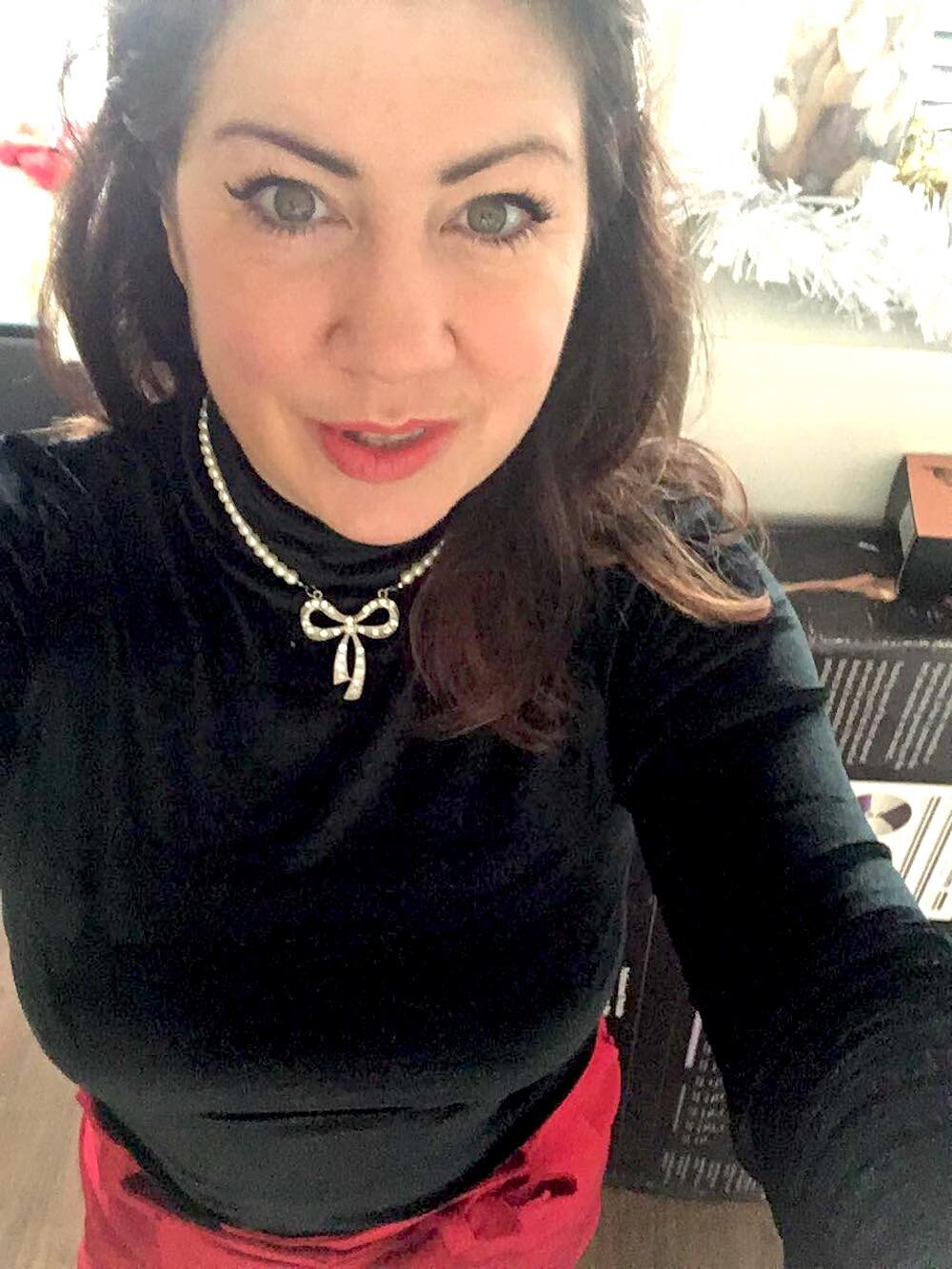
Finding Myself Again Through Fashion
I know how not being able to wear the clothes you want to because of a health condition can really bring you down and you seem to lose a part of yourself when clothes are an important aspect of your identity. Your self esteem drops and you don’t feel like your personality is coming through or being expressed, because you have to exist in what is only practical. It’s especially apparent when you’ve lost the one side of your personality through the work that helped you to do this, so you have to find a new form of self expression without the physical side. On the up side (there’s always a silver lining somewhere ), it makes you work harder to find a new style and I think a lot of women go through this change anyway in their forties. Even more difficult when a lot of the clothes you’ve been unable to wear more than a handful of times due to M.E. / Fibromyalgia now don’t fit after fitting for 20 years, some cherished and worn many times prior to relapses when I was able maintain my weight through exercise and still could if it wasn’t contra-indicated.
Watching the body I’d worked so hard to keep fit slip away into ill health and loss of muscle tone was just one aspect that had a devastating impact on my mental health.
Update: since my new eating plan, I’ve actually lost some weight I put on over the years, feeling closer now to the weight I was when fit and dancing, however muscle tone is not as good, but I’m working on gentle movements again to try and at least maintain balance, coordination, flexibility and perhaps some tone, but not sure how this is possible without proper exercise. I do my best within such massive limitations.
Allodynia (skin sensitivity to touch, heat and movement), along with insomnia, pain, RLS, nausea, disorientation, fibro fog, flu-like symptoms and temperature fluctuations; and generally feeling quite unwell for long periods of time, are what can turn a once confident, bright, bubbly and sociable person into a inward reclusive former shadow of themselves. If that sounds all doom and gloom it’s because it has been. Truth.
It’s also led me to tag some of my clothes in the shop with ‘Fibro Friendly’ tags, as I’m often in search of lovely soft fabrics. Try searching the tag to see for yourself.
I’ve been very grateful of the athlesiure and loungewear trend which has grown so much over the last few years and continues to be a popular choice for many. New companies are springing up all the time with their soft fabric offerings, and a lot more of them care about people and planet too, so it helps with vicarious trauma as well as comfort and style.
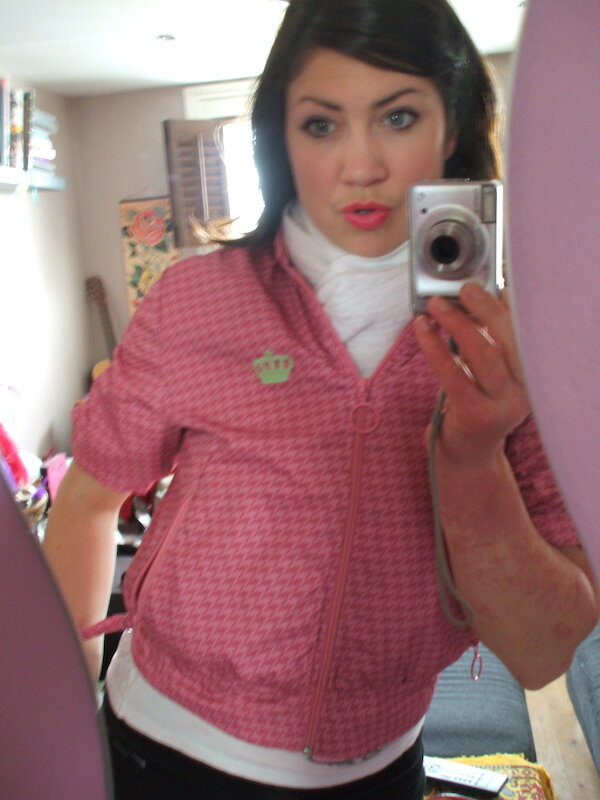
Onset of symptoms for the third time in my life: Brighton 2008 onwards. I was taking selfies before the term selfie even existed. To this day I still do that stupid pout! Where did I learn that from? Oh yes, I remember, it was me practising my burlesque faces in the mirror, all part of working on my acts! I try to smile much more now though, instead, although I’d still love to perform and fulfil that dream, in another life perhaps.
‘You look alright to me” - looks aren’t everything, although in a culture that values the aesthetic over pretty much everything else, it seems to translate a reflection to others of how we are and how we feel, or should feel because we look good.
It’s another reason why invisible conditions are so difficult to explain to others. Not being heard, being ignored and not being believed is one of the most frustrating and lonely aspects of it.
The perfection of beauty and the representation of it in advertising is proving difficult to change and we all like to look at something visually pleasing on the eye. Beauty is in the eye of the beholder too and that needs to diversify. Progress is slowly happening, and it’s a tough ask of our consumer culture. New decision makers are definitely needed. I’m slowly working on it too with ThriftVIP.
Following my 3rd major setback (laid up every month with swollen lymph nodes and feeling absolutely terrible with viral loads), about 8 years later I started to find myself again which is when I decided to look at utilising my fashion degree.
During the early days of that 3rd setback, even though I was unable to continue doing the job I loved so much and worked so hard for, I could at least occasionally claw back my identity through clothes. I actually think I was one of the first major selfie takers before it all kicked off on social media, as whenever I felt ok and had better days, I would put on my favourite clothes & make-up and take pictures of myself in my mirror at home. I called this ‘identity therapy.’ I made many videos of this strange time on my own for long periods, recording my attempts at the Lightning Process, thinking I’d smashed it and that was it, only to relapse again with awful viral symptoms and days in bed again.
As I look back now, I can see that this was a way of coping with what was happening to me. It’s a terrifying experience not knowing what’s wrong with you. With no one giving you the proper support or information & advice, meant relying on the internet and a myriad of books. This became my life. That and constant form filling and struggling to attend hostile assessments to get the benefits I needed to survive. It was a very lonely place indeed. The internet is also not always helpful and caused a lot of anxiety too.
It was the worst time of my life but I kept a small part of my own identity alive through clothes, which kept me sane and made me feel like I was still a part of the world on some days, even if it was just for one day.
Re-discovering my Style again…
Eventually I finally accepted that dance would be taking a back seat for a long time, and no longer a way to earn my bread and butter. This led me to focus again on fashion and to re-invent myself, rising once again (the Phoenix never felt so relatable) after these knock backs with illness in my late teens and early twenties, it was a familiar pattern. My mid 40’s, and after that 3rd knock back, in my thirties, sleep deprivation (severe periods of insomnia) has been the worse part of the condition for me. I also believe I was perhaps going through the beginning of peri-menopause so HRT could have saved me from being closer to suicide than I ever have ben before due to the persistent sleep deprivation, awful all-night palpitations and air grabbing, shortness of breath and feelings of suffocation (some of which could be attributed to the stress of the cladding scandal crisis I was also going through; plus lockdown, which also made seeing anyone even more difficult.
I’ve had to re-discover my own style due to an extremely sedentary lifestyle of constant rest with bits of activity thrown in, in between. Medication and not being able to exercise often led to weight gain and loss of muscle tone, so clothes I’ve had for over 20 years started to no longer fit which was also very sad as they held such happy memories of my time before the condition hit me all over again.
Re-discovering my style due to a lifestyle and circumstance beyond my control has been painful and upsetting. I feel like I’ve lost my final best years with a great fit body after years of hard work and dancing, keeping it that way. I’ve had to give in to letting it all go, resting more and more, giving up the things I love and lived for (my passion), unable to exercise at all for further long periods. It was a case of experimenting with exercise and suffering the consequences. For example: if I tried to do a normal class that others of my age would find just right, for me it could have devastating effects on my body which has been so frustrating.
As a result of years of rest, my shape and size changed dramatically, made worse by a particular medication, suggested by my then toxic boyfriend (and for a short time fiancé), so beware of the Mirtazapine, which stimulated my appetite. Food was often the only thing I had to look forward to in a day, so you can see how that worked out! It took me 2 years of cutting up those horrible things to get off them and it was awful. I vow never to touch any antidepressant ever again. All of them have been awful, some making me far more wired too.
The way our western society values appearance and the aesthetic also made it harder to accept myself beyond the body. Losing my fit body meant losing a massive part of myself and I hated it. I now feel less attractive to a potential partner because of how my body has changed, but I’m learning that I can be valued beyond the body too. It may also be due in part to emotional abuse from previous relationships, and not feeling good enough due to dad issues, so it’s all being worked on gradually and understanding that is a good first step to a healthier outlook. Initial physical attraction is still important when looking for a partner though, so it’s always something that’s on my mind, although I’m much happier and less bothered about what others think so much as I’ve got older. Being able to enjoy my life is much more important and I’m still working on that one.
The only type of exercise I’ve been able to do without too much consequence, is yoga and swimming, in small carefully curated sessions. I’m grateful for that and it’s another reason why I’m back by the sea (I hadn’t planned on being so far from everyone I know but the cladding crisis means I’m more isolated now because I went down the property ladder as a result, instead of up), despite putting up with the awful leasehold system, it spat me out and I will never touch a leasehold flat again until drastic change happens. At least I can try surfing again whenever I feel up to it (and possibly skateboard the promenade again like I used to). Working to leisure centre timetables doesn’t always work well with a fluctuating condition, so being able to put my wetsuit on or have a go whenever i can will be something. Now to find a wetsuit that doesn’t exhaust me before I’ve started which is often the case. Longing for warmer waters all the time.
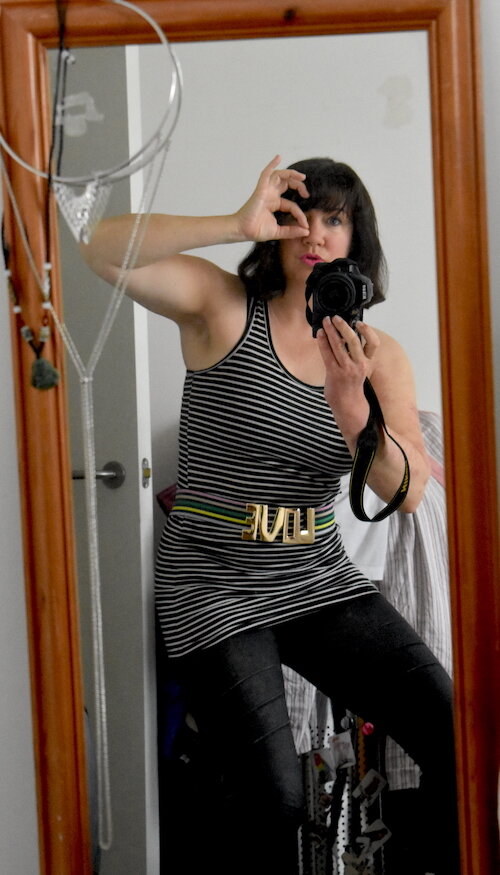
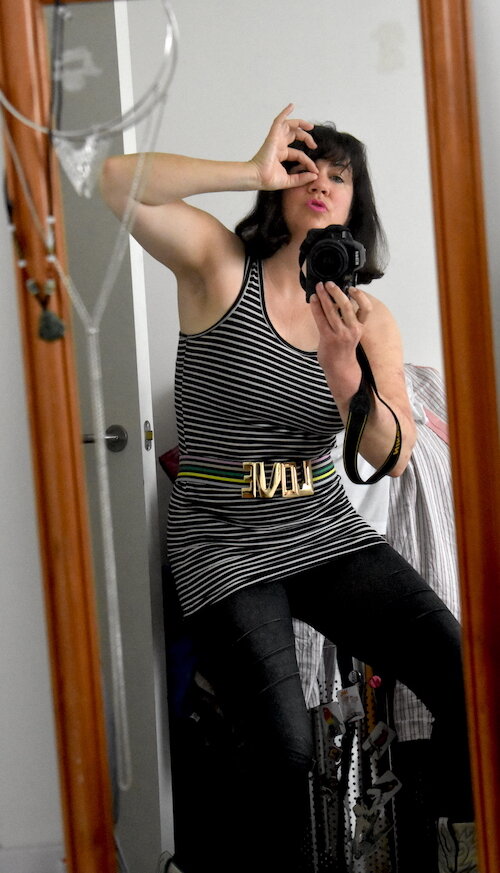
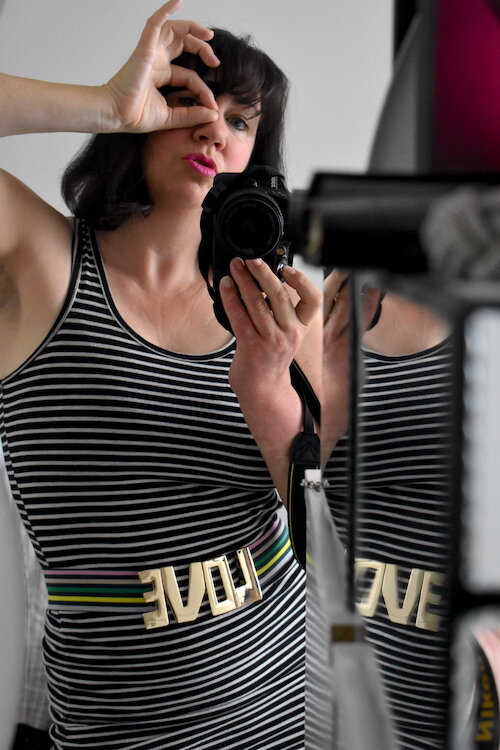
New Offerings
Having Thrift Generation kept me going creatively when I had no other focus, so this made me feel like I was doing something. When I decided to focus on a new offering for Thrift Generation with ThriftVIP I put on a pop-up about this so I could get out there and speak to women like me face to face. It also enabled me to gain invaluable feedback on the unique profiling concept and gauge the response to fashionable problems. I was beginning to realise how much I missed the social contact and working with and alongside other people, especially creatives and those who love fashion and style. It was exhausting and cost me dearly in energy and crashes all the time, but it was worth it to get some invaluable feedback from different women. I also found my go-to brand since gaining weight. The jumpsuit became a popular choice for me (only on sale, of course) for comfort and style.
It felt good that something positive at last was coming out of this, so I tried to focus it on solving some fashionable problems in order to turn it into a business. Utilising my fashion degree, another thing I’d worked so hard to achieve was also a great positive step towards a working future, especially after my disillusion with the industry as a post-graduate.


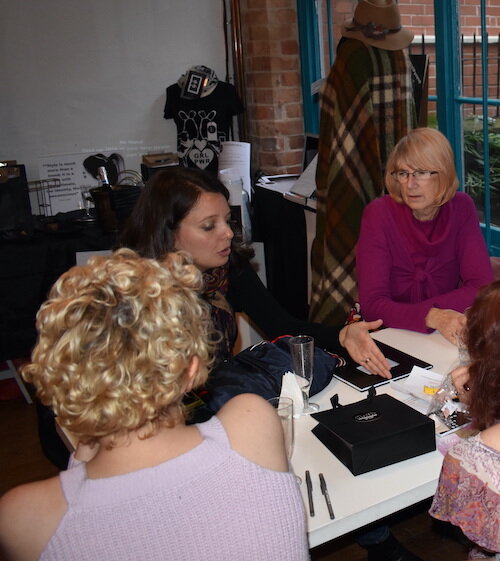
Pop-up at Think 2017: Discussing the psychology of clothes was insightful and interesting, with some generational differences and attitudes towards how we interact with each other and the clothes we wear.
This created the basis for my unique offerings for ThriftVIP. I found out that people do really enjoy connecting with others when shopping for clothes. So, I said: sign up today as a subscriber to be one of the first to know about my amazing SERVICES. In another life, one free from M.E.
What you wear matters. It can affect mood, health, self esteem and it can be transformative, giving us a sense of confidence and empowerment. Drag being an obvious example of this. The accentuated and pointy shoulder is a reflection of a growing trend in the last two years, which seems to elevate the wearer, as power suits did for women in the eighties. Many women have embraced this with their clothing choices. It’s also why I enjoy watching Killing Eve, for the transformative and obvious enclothed cognition that takes place with each situation and character.
In the near future, I would liked to have utilised models from Zebedee model management in addition to Model Students who have been brilliant. I wanted to show that fashion is for everyone and I was always striving to find new models to represent what I did here at ThriftVIP. It also also depended on what I was able to source and what fitted certain models too. I strived to source a variety of sizes, but it can be more difficult to source bigger vintage sizes. You may also see that I tried to source pieces that feel soft on the skin and comfortable to wear, often favouring pieces which give comfort and great design!
I would loved to have done another shoot with Jasper too, since his transition, using some of my flamboyant pieces, originally classed as womenswear, for him to wear as a man. If only I wasn’t limited and unsupported in terms of treatment plans and understanding with this health condition, I just might have realised these 6 years of grit, building ThriftVIP(R).
I’d also love to work with Tanatswa again, who is doing some fantastic fashion related work and some amazing shoots now with professional photographers. But then there is always remote modelling which I utilised even prior to the pandemic as a way of creating an idea without physically being there. Great adaptable ideas are also born from disability. The able bodied employers need to know this, that we can offer a lot of wisdom through the ways we work through our challenges. We are constant problem solvers, finding solutions, coming up against adversity from all angles: physically, mentally, geographically, neurologically and psychologically and there’s probably more ways I can’t think of right now.
A good example of this was a post by Sally Callow, where we surmised that planning a visit to a new place required a massive amount of micro managing, military precision, to the point of needing the building plans so we could navigate and reduce energy limiting aspects, safety nets and transportation, mobility aids needed and timings down to a tee. It can takes hours of planning for one journey alone.
Anyway, back to clothes and cognition, oh yes, and what we wear to said expedition above that is practical, warm or not too hot so layers and so on.
Enclothed Cognition
‘We introduce the term “enclothed cognition” to describe the systematic influence that clothes have on the wearer's psychological processes. We offer a potentially unifying framework to integrate past findings and capture the diverse impact that clothes can have on the wearer by proposing that enclothed cognition involves the co-occurrence of two independent factors—the symbolic meaning of the clothes and the physical experience of wearing them.’
It’s always a celebration when I feel well enough to put something on I really like. I’d love to be able to do this every day but because I don’t get to because of Myalgic E symptoms and fibromyalgia. I often make a point of celebrating these small achievements when I can by making a record of it in a series of photos and videos. It’s great to be the ‘full’ dressed me even if it’s only once or twice a week. I’m so grateful for this when I’m able.
An acquaintance and I were discussing this many years ago as a justification for constant picture taking whenever we were able to get dressed, and realised it’s a part of identity therapy and not narcissistic as some may feel it comes across.
Those with chronic conditions may understand this. It’s a way of communicating to the world that you do exist. Even if no one sees you when you’ve got your nice outfits on too it doesn’t mean you don’t wear them. This is especially important for those who identify themselves strongly through what they wear and feel it’s synonymous with their character and personality. Going Blue for M.E every year helps us to consolidate this together, so we see each other. I get involved when it falls on a better day.

Dressing like the dance teacher I used to be. If I think like it, maybe one day again, I can be it - always hope
You might have noticed people doing this on social media during ‘lockdown’. Those who might not normally do this but because they’re alone they want to make a record of their own existence to the world. It’s all part of human nature.
For many years now those who are isolated due to chronic conditions live most of their social lives online. It’s the norm already for many of us because it’s been our only social lifeline to the outside world when the days are long and lonely and everyone is busy in their own separate lives.
Those of us who are normally social butterflies have to flutter around online instead as a substitute which is not really what we want! But it can really help. We all need physical contact too. We also need to feel like we’re doing something of value, hence my turn now to activism seeing as I am unsupported in this venture.
I even had three facebook pages, because I’ve had to adapt so many times in life and change my career path and I couldn’t bear to let the other pages go. They were my passion and still are in many ways. I never give up believing that one day I could dance teach again. For now my passion is surviving and being seen and heard in society, one that embraces us all.
Update: I now have 4 instagram pages, one due to a spin-off from ThriftVIP and a new venture I’m working on for 2026 which is directly related to having M.E. and the other one is a personal space which helps me process and record my thoughts and life in general.
I’m glad others are finding that about social media too and that we will all be more patient, be more willing to understand each other and listen and communicate more about the good the bad and the ugly, ie Real Life. The true lived experience is a valuable one. It’s been really helpful to follow more neurodivergent accounts too so I can begin to understand my own journey with that too.
I find instagram more accepting and forgiving which may have something to do with a new generation of young people who want to live more authentic lives. It gives me great hope and I hope my reality helps those who see it to feel that it’s ok not to be ok all of the time. I am also grateful I have a computer and a smart (refurbed) phone and can afford the internet to be able to connect with others.
It’s great that this factor will be more understood now by some if not many, and not just the reason, but the feeling too. Empathy and compassion are two of the most important things when life is consistently uncertain especially so when you have a condition that is so misunderstood, misinterpreted and misinformed. It adds to the pain, having to explain, having to justify something you don’t even fully understand yourself and have no speaker for as such.
Thank goodness for the amazing ME community who have made me feel less alone in my journey. Those with the same passion and love of wanting to thrive again and those who share a similar enthusiasm for the arts, ethical journalism and the tenacity and determination to make something great out of something very challenging.
It’s really difficult knowing you could do so much more and realise your full potential if only it weren’t for the M.E. Fibromyalgia and C-PTSD/N holding things back and putting life on hold. Even on hold I’m still doing, at a much slower pace but I carry on. with something, anything. I’m grateful for what I’ve learnt from it too.
Always learning.
My heart goes out to all dealing with this latest pahtogen and suffering its long-term consequences or currently fighting it. It’s scary when you don’t know what you’re dealing with. Some of us have had an unfortunate head start and we can see the same thing happening to you as has happened to us by society and the medical profession, but there are some special people out there, helping us expose ME:
George Monbiot, David Fuller, Dr Speight and many more, we thank you. We continue in our campaign.
x Love to all x
There are always silver linings amongst the pain.
More about Enclothed Cognition
How adaptive clothing empowers people with disabilities | Mindy Scheier
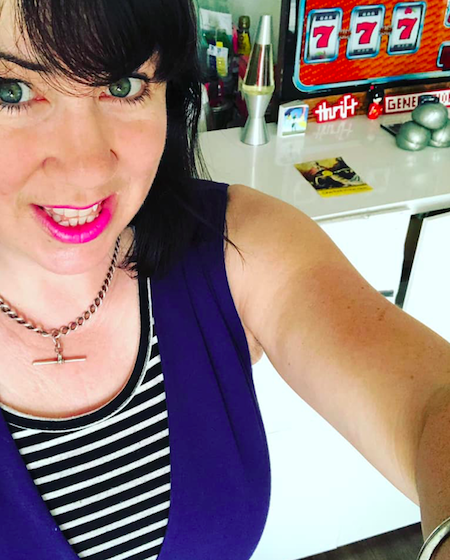
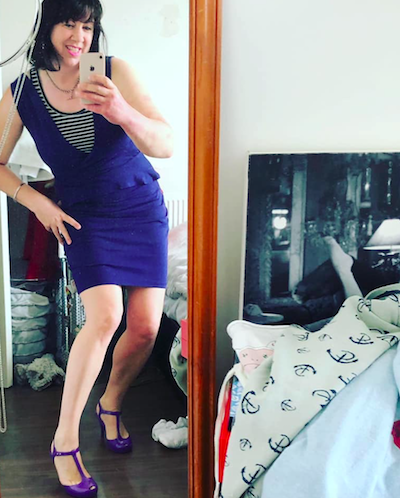
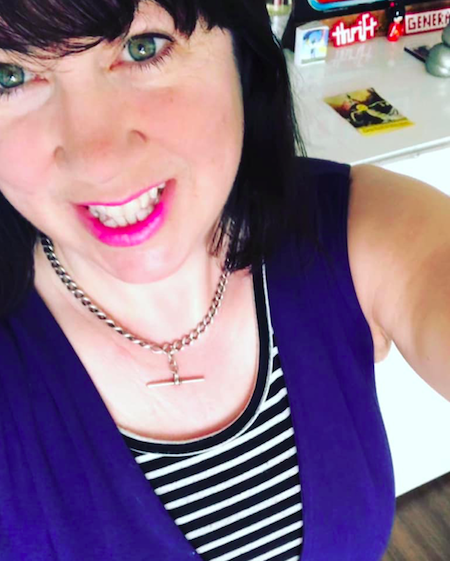
Above: Embracing one of those rare occasions where I get to wear what I want.
“My pyjamas and lounge gear are never far away”
After a uniform of comfort clothes for many days a week, most weeks, it always feels so liberating to dress in what I would do if I could for work every day. It makes me feel like myself again. Clothes are a very important part of my identity, and for most people really
Thanks for reading my very personal article. If you got to the end and read it all, I have upmost respect for you. Perhaps you are one of those who also suffers and understands. Maybe you’re looking for the answers too. I believe it’s so difficult to empathise unless you’ve been there yourself. Those who know, know.
As a thank you for reading my personal account, which no doubt will only be interesting to those who can truly resonate with it, I’m sharing a gratitude relaxation audio I made which is really good for those of us who find it difficult sometimes to sit up for a meditation.
This is not recommended for those who are struggling with sound sensitivity as there are some loud clicks that I cannot take out which are annoying. Also, this might get annoying for those unable to do a lot at all because being grateful for just lying on a bed in a darkened room unable to move at all is not what you need to hear or where you’re at. You need compassion and love and the most careful tender care. I send you much love, and if someone has read this on your behalf, all I can say is that I know you exist and I believe your pain and suffering. Please hold on.
It might help others suffering with anger or anxiety, or both, alongside physical conditions beyond their control, living without treatment. It might also make you angry because these things will come up when you’re asked to be grateful for an existence beyond your control that is hurting you and holding you back. In these instances or being in this place, it probably won’t be helpful, but if you want to come back to it you can do it another time I suppose.
I’m calling it ‘Smile with Gratitude’ (but not toxic smiling, only if you’re feeling it right now)
I recorded it a year ago, for myself. I was being gaslit by a partner as well as the medical profession so I was feeling angry and thought it was me that had to change. I was reaching out to the Buddhist centre for the second time in my life with this disease. I wanted to deal with my own anger at the time (I was also caught up in the awful cladding scandal too). Either way, I gave it a go because that’s the kind of person I am.
It’s funny how over the years I’ve become ok with listening to my own voice. I think social media has helped us in some ways to feel ok with ourselves as much as it can also be damaging, especially in some ways for teenagers. I feel it’s a tool for however we want to use it, but we need to exercise caution and awareness of our addiction to it.
So, take some time out with this.
With love, and hopefully not too cringey (which I think it is, sounds a little patronising but hey the intention is from a caring place, to help relax and smile so I hope you can).
Madeleine x