
In The Frame - Kavita Dattani - 5 Questions One Wish
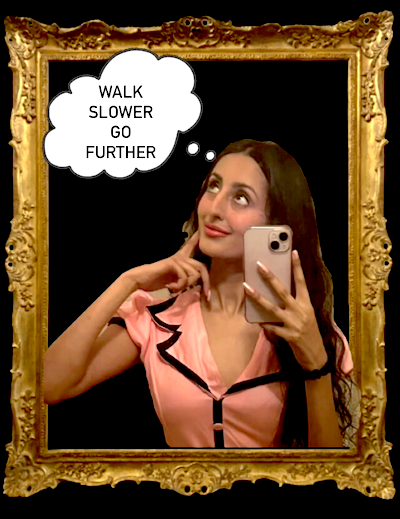
Meet Kavita Dattani
My first guest for ‘In The Frame’
A new series to kick start the New Year.
A collaborative article, written by Madeleine Wallner & Kavita Dattani
Shaking things up like a delicious rose syrup milkshake, Kavita and I discuss aspects of Indian culture in a Western world, exploring Kavita’s experiences, from style to her Indian roots and how that fits into British culture too.
The first article in this series as I explore a new direction with ThriftVIP® as a predominantly Society & Culture website; representing the lives, thoughts and feelings of those in our communities, on this island called Britain.
Opinions matter
(and so does style).
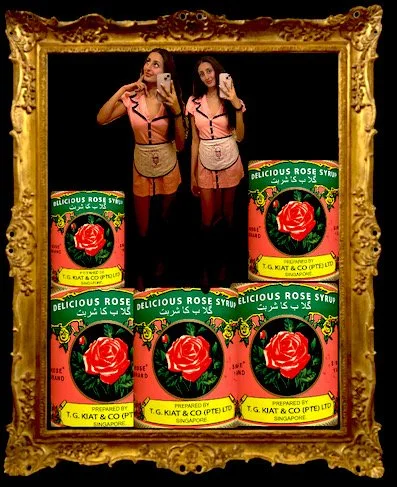
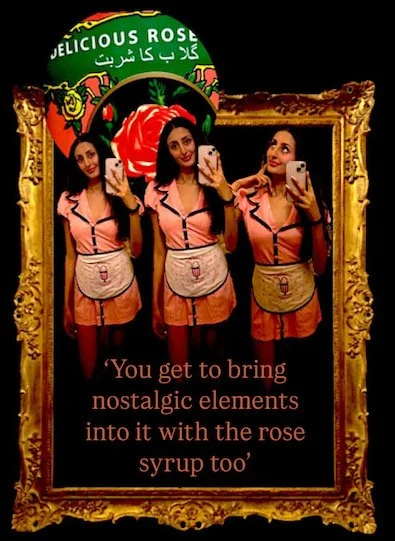
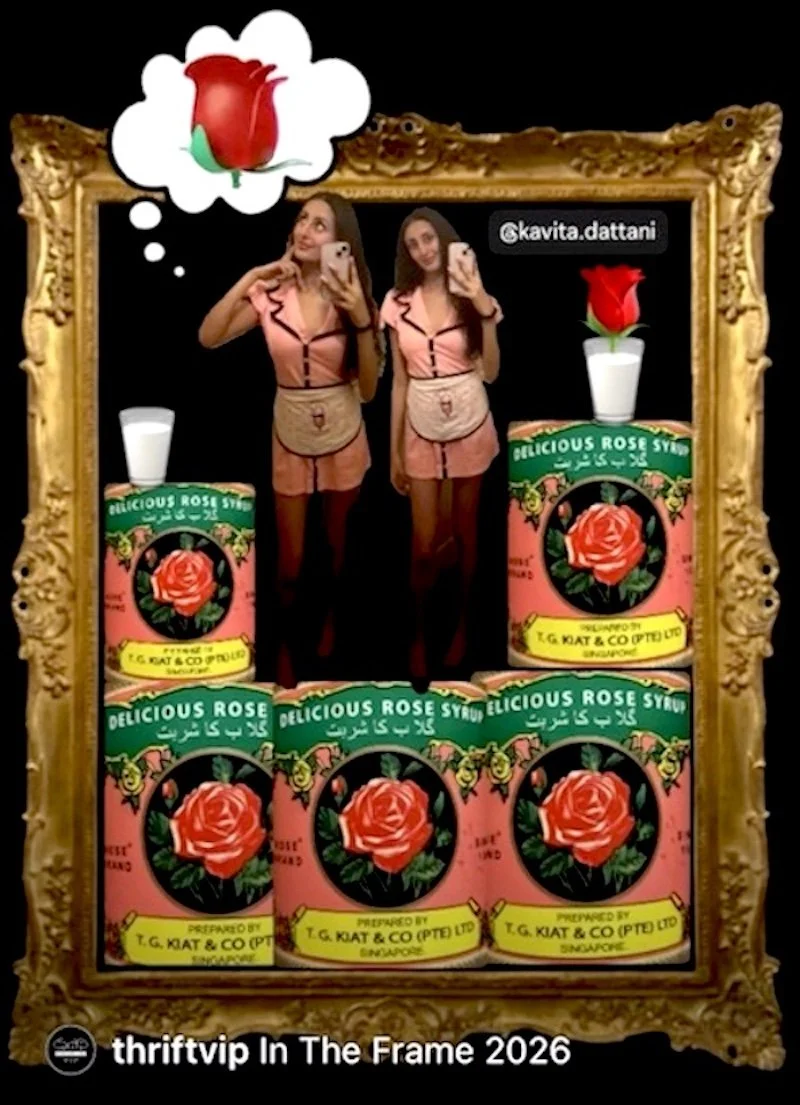
“I added it (the rose syrup tin) in my instagram post because I used to have rose milkshakes with it as a child and that links to diners! I also get to blend both West and East into the image which is a huge part of my identity.”
Connecting through clothes….
My connection with Kavita came about through a purchase via ThriftVIP®
from the Depop shop (thrift_stop_pop_shop).
Kavita shared her diner dress outfit photos with me, and after several exchanges we both agreed that this deserved at least a dedicated post, then why not an article to start my new series. It felt too important not to share the information Kavita had generously offered.
We’ve collaborated on this article to provide a candid snapshot of Kavita’s style, some of her cultural experiences, and the ways she expresses her style, in an increasingly conflicted world.
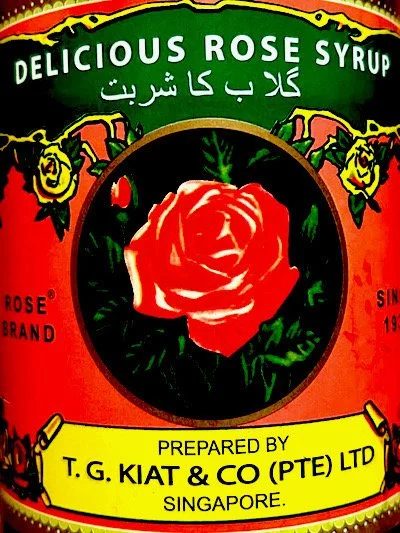
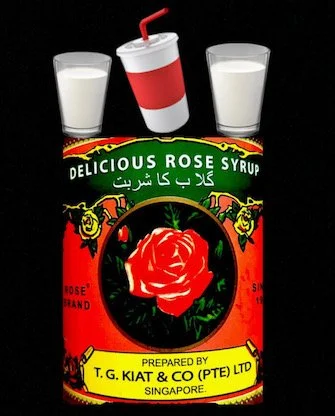
Childhood memories and nostalgia can help us to merge comforting memories with where we’re at now, evoking more secure times. This feels a bit like my own experience recently with the resurgence of The Muppet Show, and accounts sharing old Sesame Street videos; or remembering when my nana used to sprinkle pretend fairy dust onto my eyes at bedtime to help me drift off to sleep. Such sweet memories uplift the soul and help us to remember the often simpler, happy times of childhood, those we can bring with us, to comfort ourselves with in adulthood, especially when times are tough.
Those behind the clothes
Not only did Kavita share her styled outfit photos with me, but also a candid insight into life as a British-Indian woman.
It’s important to get our words out there and that can also be a cathartic process too.
Read on for this delicious blend…
5 Questions to Kavita…
1. Madeleine: What attracted you to purchase the Pink Diner Girl outfit from the ThriftVIP® Depop shop ?
Kavita: I wanted to buy my Halloween costume second-hand, since I want to make more sustainable choices with clothing and I recognise that Halloween can promote hyper-consumption.
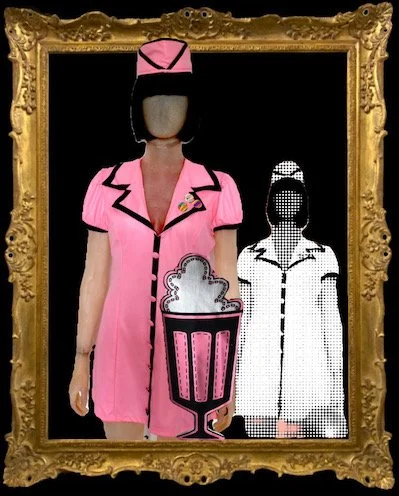
Depop and Vinted are my go-to second-hand retailers; I came across the Pink Diner Girl outfit via ThriftVIP’s Depop Shop. I thought it was unique, memorable and quite iconic!
This costume has a nice balance of both quirky and cute/girly in a costume, which is why I was drawn to it (scary costumes aren’t really for me)!
Indian Roses and Milkshake Bubbles…
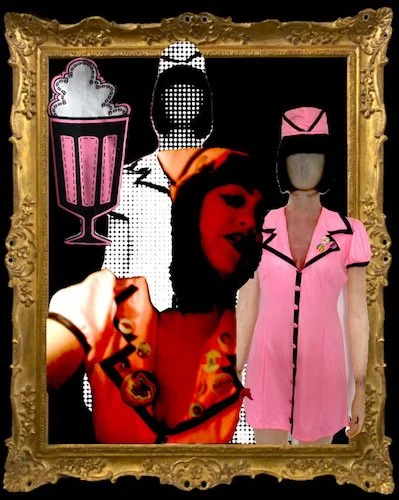
M: It’s interesting that this particular outfit found us here, because it has a particularly poignant but significant story behind it, as it was an outfit relating to one of four acts that I never got to perform (due to declining health). I’d created a short act with audio and props, utilising this outfit in a fun, quirky and cheeky ensemble during my Brighton days. I did wear it out on a few occasions, so it’s had some fun around Brighton too!
To see another person embracing it and having some fun in it, reframes this piece for me now, evoking more joy, as we found a collaborative union in writing here too. It feels quite serendipitous.
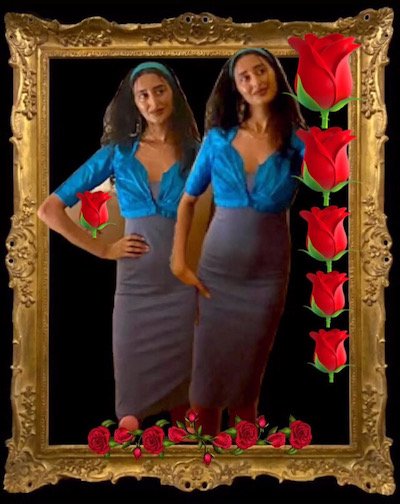
I really like the way Kavita added the rose syrup tin into her original montage, pictured with the photo of herself in the diner outfit because it added a pop art element which fit with the whole style and fun of it, including the milkshake / diner connection. The rose tin itself has a kitsch-vintage feel which adds to the overall visual aspect for our article. As a concept in terms of style and narrative, it works really well, incorporating West and East to create a new narrative.
2. M: How did it make you feel wearing it?
K: I felt confident, beautiful and cool at the Halloween party I attended. I paired the costume with a pair of black open-toe heels (sourced from my local charity shop), which added mature femininity to the look; the baby pink colour was very pretty – it looked very flattering.
Part of the appeal of this costume was the playfulness! It felt exciting to dress as a diner waitress, which you associate with films and a different era.
I am a huge fan of Halloween and dress up, because it lets us adults embrace the magic of pretend play that reminds us of childhood. Overall, I was super pleased with my purchase from ThriftVIP®
M: You’ve hit the nail on the head there about dressing up and embracing the magic of these activities, which we’re often conditioned to think are reserved only for childhood. We can be adults and play too!
3. M: How does your Indian culture influence your personal style in a western world?
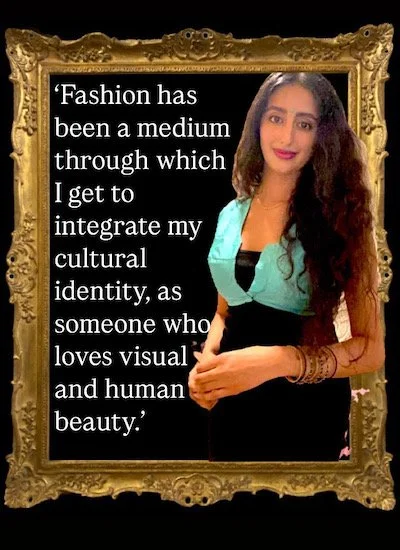
K: Having spent my teenage years heavily confused about being British-born and ethnically Indian, I enjoyed playing around with elements of South Asian fashion at university – I really enjoy creating hybrid looks that make South Asian pieces part of my casual/going out outfits.
Some people wear bindis and jewellery alongside their everyday outfits, for example. My favourite thing to do is wear my sari blouses with other clothing pieces (for example, over a dress or with a skirt).
Fashion has been a medium through which I get to integrate my cultural identity, as someone who loves visual and human beauty…
M: That must’ve been tough, Kavita, and an extra layer of framing your identity at an already confusing time. Playing around with a mix of styles and looks is how we often find our identity and that which empowers us. This can take us on into adulthood too, as we go through changes; grow and develop in life. I’m sure it was very interesting, and enjoyable too introducing elements of South Asian fashion into casual and social dressing, without losing your ethnic Indian heritage.
It reminds me of fashion university days when I styled a friends collection for a photo shoot. I hadn’t really taken the time to learn about my friend’s culture enough and I regret that. I remember also mistaking ‘mosque’ for ‘temple’ when referring to the place of worship. My friend was raised in a Hindu household and it was a careless mistake. I wish we’d been taught much more in school about other ethnicities. I remember we had to pick one from a selection back then and because I hadn’t opted for religious studies, it left out a robust cultural understanding of various ethnicities. I’m so grateful to have had the opportunity here to make some reconciliation in my understanding years later, after previous careless attempts, which really exposed my uneducated white-ness at the time.
Learning more now as an adult is eye opening. There is so much beauty and art within the diversity of our cultures.
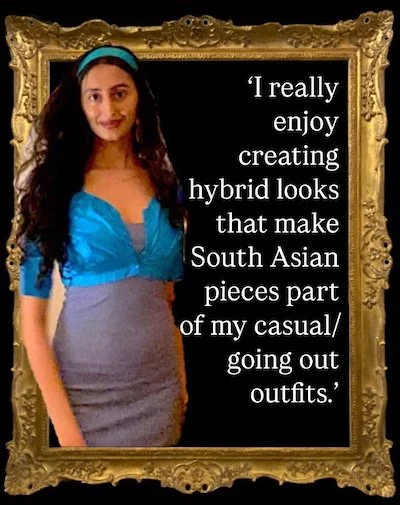
K continues: …I think this speaks to the power of art and creativity in helping me make more coherent sense of my identity. In fact, finding cross-cultural parallels is how I ended up writing this article; I merged a photo of me in my Pink Diner Girl costume (with a pink milkshake on the apron) with the logo of a rose milkshake brand that I remember from my childhood.
I like to reflect upon memories of South Asian influences from my childhood. Making and drinking rose milkshakes with my grandparents is one that I remember fondly.
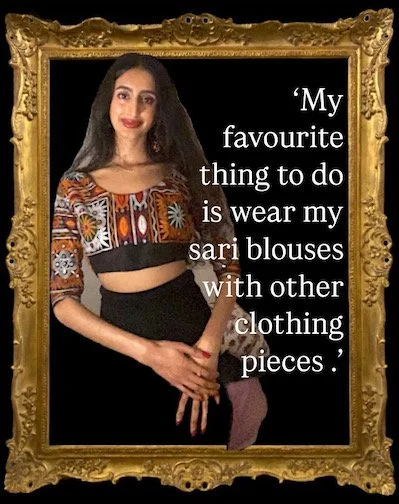
Dual Identities…
4. M: How have you managed to work on integrating and embracing your racial identity?'
K: Using social media mindfully has in part helped me with this.
Seeing all types of people online living their lives and using the internet as a medium for self-expression and living life like an art form makes me feel connected to some common humanity, no matter our skin colour or religion.
Creativity also helps me to feel closer to my humanness and, therefore, I can project that onto others and feel that same humanity when I see everyone else living their lives too.
M: That’s such a beautiful way to put it, and I agree, there seems to be a kind of universal appeal there that transcends the usual barriers to expressing our style, no matter what our identity, and that feels refreshing. Apart from the obvious Meta controls, in many ways it still feels freeing in a world that doesn’t always accept all on face value. We become living art which connects us.
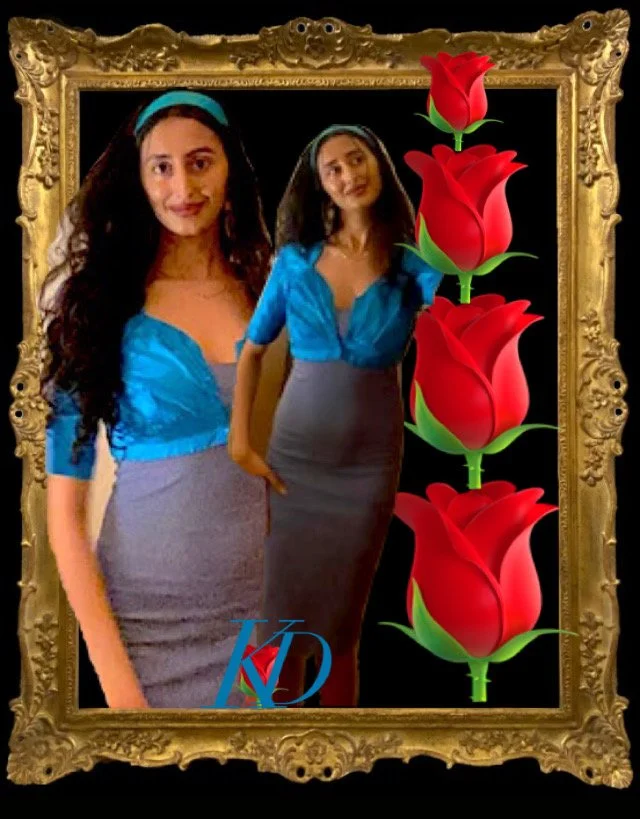
“Seeing all types of people online living their lives and using the internet as a medium for self-expression and living life like an art form makes me feel connected to some common humanity, no matter our skin colour or religion.”
5. M: What do you want to say to British society?
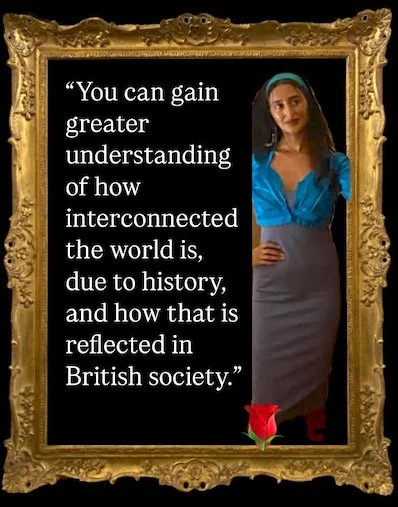
K: I am sure that some people will have already done this kind of research, but I would say it’s not only useful but also fascinating to learn about immigrant history and culture in the UK. You can gain greater understanding of how interconnected the world is, due to history and how that is reflected in British society.
It’s also interesting to learn about the lived experiences of British ethnic minorities across different generations and the subcultures and cultural production this has given rise to.
Kavita recommneds reading: 'Empireland' by Sathnam Sanghera
M: We are all responsible for this and many of us are open to learning. When I write these articles, I enjoy the research aspect and always learn something new. Thank you for this recommendation as it’s also a reminder to watch ‘Empire State of Mind’ on Channel 4, if it becomes available again on demand.
Popular Culture: Music, Fashion & Film…
When you mentioned using the music of Queen on the ThriftVIP® instagram grid to promote the article, it prompted me to delve a little into Freddie Mercury’s roots, rewatching Bohemian Rhapsody and taking cues from the film. The important connection to Freddie Mercury provided another outlet to make further connections here.
A version of Queen’s song will be used in the post to announce the article’s arrival on the ThriftVIP® instagram grid, replacing our previous collaborative choice used for the teaser post: a bardcore version of Kelis’ ‘Milkshake.’
I originally searched for music using ‘rose syrup’ as search words for a story highlight which provided an Arabian score, but I’m pleased you mentioned Freddie Mercury; serving as a helpful reminder of a fellow British-Indian. An individual who achieved global fame in the mainstream of popular culture via music, and of course, his legendary Live Aid performance in 1985.
This has offered a more sentimental choice, making it feel more relatable and humanising, providing powerful cultural symbolism, personal to you. It’s also one that should remind us all to ask the question: what are we fighting for?
I also agree that social media can help us on many levels in terms of self-expression when putting ourselves out there.
I loved the film, which I’d purchased several years ago so it was great to rewatch it, noting its references to Freddie’s ethnicity, the importance of awareness around Freddie’s health struggles (with AIDS and homosexual relationships also having been stigmatised during this time); and its relation to fashion references, with Biba representing times where two cultures met (as fashion and music often does), alongside the love interest aspect.
Not only did this serve as an important reminder of the AIDS crisis, I learned some interesting background knowledge about Freddie’s (Farrokh Bulsara’s) Zoroastrian faith, the Parsis, and more about the British Empire in Africa in the 19th century.
Many stories will have been omitted from history such as lived experiences from those who also suffered greatly, which I’ve learnt about since in adulthood; much we weren’t taught about in school.
More on the British Empire here.
The importance of the arts such as fashion, film and music is that they’re a medium that can tell these stories beautifully, albeit often portraying poignant reminders of privilege, status and power; and of the systems in place, bringing these elements together into the mainstream. Film as an art form helps to soften the blow through music, style, and empathy with the characters involved, and the actors who play them.
In its own way, the diner dress as an icon of American culture has brought East and West together here within the diversity of popular culture, to create a new identity and meaning, due to the influences of fashion, film (and music) throughout the decades. They will continue to rise and fall in popularity as icons of modern cultural significance, much like examples of objects d’art that come and go in our lives.
Forming identities through what we wear, where we are in the world, the situation we’re in, and what’s happening around us, can be tough, especially within marginalised groups, but when you add another layer to that with a dual ethnic identity, the world can feel an even more confusing and often dangerous place, for those who already feel that they don’t entirely ‘fit in.’ We can change that through understanding why and how to make that better, mostly by listening and learning, and as proved here, by dressing up and having some fun! I think Freddie Mercury would definately have agreed with us there.
Connecting Cultures…
I’d done some research prior to this around dual identities and found a podcast titled: Connecting Cultures with Weirong Li of Raw Culure, which might be helpful, offering a lived experience of this from a female perspective. I’ve included the YouTube epsiode of the same name below:
From 2:45 minutes in, Ahana Banajee discusses identity, friendship, style and acceptance into British culture being of British-Indian heritage herself
One Wish for your Local Community?
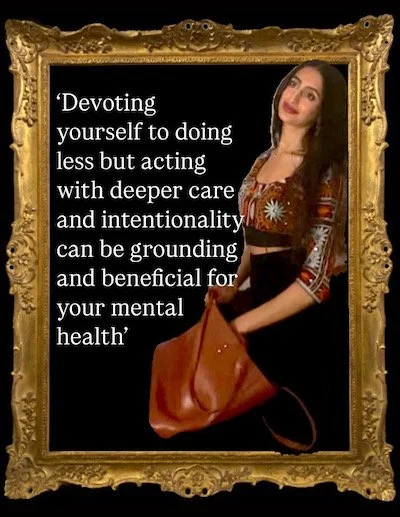
K: I would say to those who are interested in climate change and making sustainable switches (with fashion or in any other form of lifestyle choice): walk slower and go further.
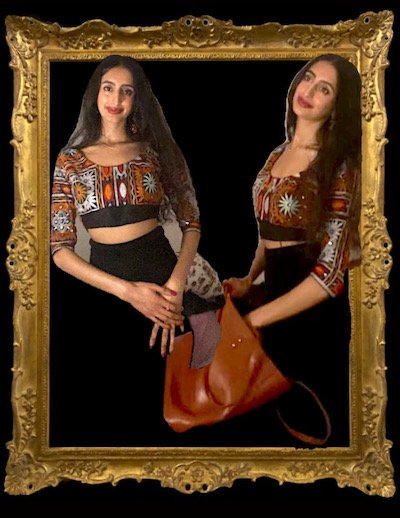
Devoting yourself to doing less but acting with deeper care and intentionality can be grounding and beneficial to your mental health.
Embracing slower living can also promote behaviours that make us better stewards of the environment.
The efforts feel very rewarding to me!
M: I couldn’t agree more, Kavita.
In the words of Freddie in the film, Bohemian Rhapsody:
“We’re all legends”
(That needs to be something we hold onto, cherish and see in each other)
“What the hell we fighting for”
(Lyrics from Hammer to Fall, 1984 album The Works. - the phrase questions the purpose of conflict, urging reflection on the futility of fighting in the face of inevitable consequences - cold war at the time / life and death)
“We haven’t got much time”
(quote from Freddie in the film, Bohemian Rhapsody)
Good Thoughts, Good Words, Good Deeds.
(the central moral precepts of the religion are good thoughts (hwnata), good words (hakhta), and good deeds (hvarshta), which are recited in many prayers and ceremonies of the Zoroastrian faith.)
“Embracing slower living can also promote behaviours that make us better stewards of the environment. The efforts feel very rewarding to me.”
Thank you so much for sharing your candid thoughts in such beautiful and succinct ways with me, Kavita. What a great way to kickstart my series. I can learn so much from the way you curate your answers to deliver such eloquent responses, something I find tricky to master.
Thank you for reading the first part to my new series of articles, exploring society and culture within our wonderful communities on this island called Britain.
It’s been a real treat to start combining text and images with graphics to create more visually appealing content for my website; with less wordy articles that are easier to digest; without losing impact or importance of the overall message.
I hope you’ve enjoyed reading and absorbing the colours, text and style.
Let me know if you’ve got something to say and would like to show this with elements of your style too. I love to write about those behind the clothes and to see how people style themselves across society while integrating into their communities.
Get in touch here.
With love,
Madeleine